
#What Are the Benefits and Features of Modular Operating Theaters?


What Are the Benefits and Features of Modular Operating Theaters? A Complete Guide
The healthcare industry is continuously evolving with advancements in medical technology, surgical equipment, hospital infrastructure, and infection prevention systems. Modern hospitals require highly efficient, hygienic, and well-organized surgical environments to provide better healthcare services. One of the most important developments in modern hospital infrastructure is the Modular Operation Theatre (Modular OT).
Modular operating theaters are specially designed surgical environments that use prefabricated wall panels, ceiling systems, specialized flooring, advanced air filtration technology, medical gas systems, and integrated surgical equipment. Unlike conventional operation theaters, modular OTs are designed with a coordinated approach that allows different components to work together as a complete surgical environment.
These operating theaters can be customized according to the requirements of different surgical specialties, hospital infrastructure, available space, and medical equipment. They also provide flexibility in installation, maintenance, expansion, and future upgrades.
One of the major reasons hospitals are adopting modular operating theaters is their ability to combine modern technology, controlled environmental conditions, hygienic surfaces, and efficient surgical workflows in one integrated space.
In this article, we will explore the benefits and features of modular operating theaters, their major components, installation advantages, hygiene considerations, customization options, and the important factors hospitals should consider before selecting a modular OT system.
What Is a Modular Operating Theatre?
A Modular Operating Theatre is a specially engineered surgical room designed using prefabricated modular components and integrated medical systems. These components include modular wall and ceiling panels, surgical lighting, laminar airflow systems, HEPA filtration, medical gas outlets, electrical systems, hermetically sealed doors, anti-static flooring, and OT control panels.
The primary purpose of a modular operation theatre is to create a well-organized and controlled surgical environment that supports the requirements of modern medical procedures.
A modular OT is generally designed according to the hospital’s surgical requirements, the type of operations performed, the available infrastructure, and applicable healthcare standards.
Unlike conventional operating rooms, where construction elements and equipment may be planned separately, a modular OT follows an integrated design approach. This helps coordinate ventilation, lighting, electrical systems, medical gases, wall finishes, and surgical equipment.
What Are the Benefits of Modular Operating Theaters?
Modular operating theaters offer several advantages for hospitals, healthcare institutions, surgeons, and medical staff. Some of their most important benefits are explained below.
1. Rapid Installation and Faster Project Completion
One of the major benefits of modular operating theaters is the potential for faster installation compared with conventional construction methods.
Traditional operating theatre construction may involve several activities, including civil work, wall finishing, flooring, electrical installation, ventilation arrangements, and equipment integration. When these activities are not properly coordinated, the overall project timeline can increase.
Modular operating theaters use prefabricated components that can be manufactured and prepared before installation at the hospital site. This can reduce the amount of on-site construction work and help coordinate different installation activities more efficiently.
Key advantages include:
-
Prefabricated modular wall and ceiling panels.
-
Reduced dependence on conventional on-site finishing work.
-
Better coordination between different installation activities.
-
Organized installation of electrical and medical gas systems.
-
Potentially shorter project completion timelines.
-
Reduced disruption to certain existing hospital areas, depending on the project.
The actual installation period depends on the OT size, site readiness, design complexity, equipment requirements, and approval process.
2. Scalability and Future Expansion
Hospitals often experience changes in patient volumes, surgical requirements, and medical specialties. A modular operating theatre can be planned with future expansion and modification in mind.
For example, a hospital may initially require a basic modular OT for general surgical procedures. Later, it may need additional equipment, improved ventilation arrangements, or a different configuration to support specialized surgeries.
A properly planned modular OT system can make certain modifications easier, depending on the original design and building infrastructure.
Key advantages include:
-
Flexible planning for future hospital requirements.
-
Possibility of modifying selected modular components.
-
Better coordination when adding compatible medical equipment.
-
Adaptability to changing surgical workflows.
-
Opportunity to plan additional operating rooms as hospital requirements grow.
Scalability should be considered during the initial design stage because structural limitations, HVAC capacity, electrical loads, and medical gas infrastructure may affect future expansion.
3. Cost-Effectiveness and Better Project Management
Cost-effectiveness is another important reason hospitals consider modular operating theaters.
Conventional operating theatre construction may involve multiple contractors, different construction activities, and separate equipment installation processes. Modular construction allows several components to be planned and coordinated as part of an integrated system.
This can help hospitals manage construction activities and project resources more efficiently.
How modular operating theaters can help control project costs:
-
Prefabricated components can reduce certain on-site construction activities.
-
Coordinated installation can help minimize unnecessary rework.
-
Standardized modular panels can simplify selected replacement activities.
-
Integrated planning can improve project management.
-
Properly selected materials may reduce long-term maintenance requirements.
-
Better equipment planning can help avoid unnecessary modifications.
However, the overall cost depends on the OT size, equipment specifications, air filtration requirements, automation systems, materials, and installation complexity.
Hospitals should compare the complete project cost, including installation, testing, commissioning, maintenance, and operational expenses, rather than considering only the initial purchase price.
4. Improved Hygiene and Infection Control Considerations
Maintaining a hygienic surgical environment is one of the most important requirements of an operating theatre.
Modular operating theaters can incorporate specialized materials and integrated ventilation systems designed to support cleaning, environmental control, and infection prevention procedures.
Depending on the design, these systems may include:
-
Smooth and non-porous wall surfaces.
-
Seam-minimized modular wall panels.
-
Properly sealed joints and connections.
-
Hygienic ceiling systems.
-
Easy-to-clean flooring.
-
HEPA filtration systems.
-
Controlled airflow arrangements.
-
Properly designed doors and access points.
These features can help reduce areas where dust and contaminants may accumulate and support routine cleaning and disinfection procedures.
A properly designed ventilation system can also help maintain the required air quality, pressure relationships, temperature, and humidity conditions.
It is important to understand that modular construction alone does not guarantee infection prevention. Actual performance depends on ventilation design, filtration efficiency, maintenance, cleaning protocols, and hospital infection-control practices.
5. Customizable Design According to Hospital Requirements
Every hospital has different surgical requirements, available space, equipment specifications, and operational workflows.
One of the major advantages of modular operating theaters is the ability to customize the design according to these requirements.
A modular OT can be planned for different surgical specialties, including:
-
General surgery.
-
Orthopedic surgery.
-
Neurosurgery.
-
Cardiovascular surgery.
-
Gynecological surgery.
-
Urology.
-
ENT surgery.
-
Plastic and reconstructive surgery.
Customization may include the selection and positioning of surgical lights, medical gas pendants, equipment panels, doors, control systems, and ventilation arrangements.
Common customization options include:
-
Different OT room dimensions.
-
Customized wall and ceiling panel configurations.
-
Different flooring materials.
-
Integrated OT control panels.
-
Medical gas outlet arrangements.
-
Surgical lighting configurations.
-
Equipment pendant positioning.
-
Customized storage and access arrangements.
The layout should be developed after considering the movement of surgeons, anesthetists, nurses, patients, and medical equipment.
6. Controlled Surgical Environment
A controlled surgical environment is essential for supporting safe and organized surgical procedures.
Modular operating theaters can integrate different environmental control systems to maintain suitable operating conditions.
These systems may include:
-
HEPA-filtered air supply.
-
Laminar airflow or other appropriately designed airflow arrangements.
-
Positive pressure control where required.
-
Temperature regulation.
-
Humidity control.
-
Air change management.
-
Integrated monitoring and control systems.
These systems are planned according to the intended use of the operating theatre and applicable healthcare engineering standards.
A well-designed environmental control system helps maintain the required indoor conditions and supports the hospital’s infection-control strategy.
7. Advanced Air Filtration and Ventilation Systems
Air quality is an important consideration in modern operating theatre design.
Modular operating theaters can be equipped with advanced HVAC and filtration arrangements to help control airborne particles and maintain the required environmental conditions.
Depending on the project specifications, these systems may include:
HEPA Filters: High-Efficiency Particulate Air filters are used to remove a high proportion of airborne particles when properly selected, installed, and tested.
Laminar Airflow Systems: These systems are designed to deliver controlled airflow over a defined area, depending on the ventilation design.
Air Handling Units (AHUs): AHUs help regulate the supply of conditioned and filtered air to the operating theatre.
Pressure Control: Appropriate pressure relationships between the operating theatre and adjacent areas can help manage airflow direction.
Temperature and Humidity Control: Environmental monitoring and control systems help maintain the specified temperature and humidity conditions.
Proper system design, commissioning, filter replacement, and regular maintenance are essential for maintaining ventilation performance.
8. Better Surgical Workflow and Equipment Organization
A well-planned modular operating theatre helps organize the surgical environment according to the requirements of the medical team.
During surgical procedures, surgeons and medical staff need convenient access to equipment, instruments, medical gases, electrical connections, and monitoring systems.
Modular OT planning allows these elements to be positioned according to the surgical workflow.
Workflow-related advantages include:
-
Organized equipment positioning.
-
Convenient access to medical gas outlets.
-
Proper placement of surgical lights.
-
Better integration of medical pendants.
-
Reduced unnecessary movement around selected work areas.
-
Coordinated electrical and data connections.
-
Improved utilization of available room space.
An efficient layout can support smoother coordination among surgeons, anesthetists, nurses, and other operating theatre personnel.
9. Easy Cleaning and Maintenance
Operating theatres require regular cleaning, disinfection, inspection, and maintenance.
Modular operating theaters can use specialized wall panels, ceilings, doors, and flooring designed to support routine cleaning procedures.
Their design may include smooth surfaces, sealed joints, and appropriately selected materials that help simplify maintenance.
Maintenance-related benefits include:
-
Easy-to-clean wall and ceiling surfaces.
-
Accessible service arrangements where properly designed.
-
Replacement of selected damaged modular components.
-
Organized electrical and utility systems.
-
Simplified inspection of certain system components.
-
Better planning of preventive maintenance activities.
Regular inspection of air filters, ventilation equipment, electrical systems, medical gas outlets, doors, and control panels is still necessary.
10. Integration of Advanced Medical Technology
Modern operating theatres require different medical and technical systems to function together.
Modular operating theaters can be designed to integrate several types of advanced medical equipment and infrastructure.
These may include:
-
LED surgical operating lights.
-
Medical gas supply systems.
-
Anesthesia workstations.
-
Surgical equipment pendants.
-
Patient monitoring systems.
-
OT control panels.
-
Digital displays.
-
Communication systems.
-
Electrical isolation and backup power arrangements.
-
Data and connectivity infrastructure.
The integration of these systems helps create an organized surgical workspace and supports the operational requirements of modern hospitals.
11. Space Optimization and Efficient Room Layout
Hospital infrastructure often has limited available space. Therefore, the effective utilization of every square foot is important.
Modular operating theaters can be designed according to the available room dimensions and the equipment required for the intended surgical procedures.
Proper planning helps position surgical lights, pendants, medical gas outlets, electrical panels, doors, and storage areas efficiently.
Space optimization can provide:
-
Better utilization of available room dimensions.
-
Organized equipment positioning.
-
Improved accessibility for medical staff.
-
Reduced unnecessary obstruction.
-
Better movement planning for patients and equipment.
-
Flexible arrangements for different surgical requirements.
The final design should always consider equipment clearances, patient movement, emergency access, and applicable building requirements.
12. Durable Materials and Long-Term Performance
The materials used in an operating theatre must be suitable for demanding hospital environments.
Modular operating theaters can incorporate specialized materials designed for durability, cleaning, and regular disinfection.
Common materials and finishes include:
-
Powder-coated metal wall panels.
-
Stainless steel components.
-
Specialized ceiling panels.
-
Antibacterial or hygienic surface finishes.
-
Seamless or suitably sealed flooring systems.
-
Durable door assemblies.
-
Corrosion-resistant hardware.
Material selection should consider cleaning chemicals, impact resistance, moisture exposure, maintenance requirements, and compatibility with hospital operations.
13. Reduced On-Site Construction Disruption
Hospitals must continue providing healthcare services even when infrastructure improvements are taking place.
Modular construction can help reduce certain on-site activities because components are manufactured or prepared before reaching the hospital.
This may be particularly useful when upgrading existing healthcare facilities.
Potential advantages include:
-
Reduced conventional construction work.
-
Better coordination of installation activities.
-
Less dependency on multiple finishing processes.
-
Improved project scheduling.
-
Potentially reduced disturbance to nearby hospital areas.
However, the actual level of disruption depends on the project location, access, existing utilities, and installation plan.
14. Better Monitoring and Control of OT Systems
Modern modular operating theaters can incorporate centralized control panels to help medical staff monitor and manage different operating theatre functions.
An OT control panel may provide access to selected systems such as:
-
Operating room lighting controls.
-
Temperature and humidity displays.
-
Pressure differential monitoring.
-
Operating theatre clocks and timers.
-
Medical gas alarm indications.
-
HVAC status information.
-
Electrical system indications.
-
Other integrated monitoring functions.
The exact features depend on the selected control system and project specifications.
A properly integrated control system helps improve operational visibility and supports the management of essential OT infrastructure.
15. Flexibility for Different Surgical Specialties
Different surgical procedures require different equipment, layouts, and environmental arrangements.
Modular operating theaters can be customized to support the needs of multiple surgical specialties.
For example:
General Surgery OT: Designed for common surgical procedures with appropriate lighting, medical gas systems, and equipment arrangements.
Orthopedic OT: May require specialized surgical tables, imaging equipment compatibility, and additional equipment clearance.
Cardiac Surgery OT: May require specialized monitoring, anesthesia, medical gas, electrical, and equipment arrangements.
Neurosurgery OT: May require specialized surgical lighting, imaging compatibility, and carefully planned equipment positioning.
Gynecology OT: Can be customized according to the requirements of gynecological and obstetric surgical procedures.
Each specialty requires an appropriate technical design. A standard modular OT layout should not automatically be considered suitable for every surgical discipline.
16. Support for Hospital Modernization
As hospitals upgrade their facilities, they increasingly look for infrastructure that can accommodate new equipment and changing operational requirements.
Modular operating theaters offer an integrated approach to upgrading surgical environments.
They can be planned with provisions for future medical equipment, ventilation improvements, electrical systems, and other technical requirements.
This makes them a useful option for hospitals developing new surgical departments or modernizing existing operating theatre facilities.
17. Portable and Temporary Operating Theatre Options
Some modular healthcare facilities are designed as relocatable or temporary structures.
These solutions may be useful in situations such as:
-
Emergency healthcare projects.
-
Disaster response facilities.
-
Temporary hospital expansion.
-
Remote healthcare infrastructure.
-
Additional surgical capacity during renovation projects.
However, not every modular operating theatre is portable. Permanent hospital modular OTs are generally integrated into the building infrastructure.
Relocatable solutions require appropriate structural, environmental, utility, and regulatory planning.
What Are the Main Features of a Modular Operating Theatre?
In addition to the benefits mentioned above, modular operating theaters contain several specialized components that help create an integrated surgical environment.
The following are some of the most important features.
1. Modular Wall Panels
Modular wall panels form an important part of the operating theatre interior.
These panels are generally manufactured using specialized materials and finishes suitable for healthcare environments.
Common features include:
-
Smooth and hygienic surfaces.
-
Durable construction.
-
Easy-to-clean finishes.
-
Properly sealed panel joints.
-
Integration provisions for medical equipment.
-
Compatibility with selected electrical and utility systems.
The panels may also be customized to accommodate medical gas outlets, control panels, display screens, and other equipment.
2. Modular Ceiling System
The modular ceiling system is designed to accommodate important operating theatre equipment and utility connections.
It may include:
-
Surgical light mounting arrangements.
-
Medical pendant supports.
-
Air supply and return arrangements.
-
Filtered air distribution.
-
Integrated ceiling panels.
-
Service access provisions.
The ceiling design must consider the structural loads of suspended equipment and the ventilation requirements of the room.
3. Laminar Airflow System
Laminar airflow systems are designed to deliver controlled airflow across a defined area of the operating theatre.
They are commonly considered for operating rooms where specific airflow patterns are required.
Depending on the system design, they may include:
-
HEPA filtration.
-
Air distribution units.
-
Dedicated airflow arrangements.
-
Compatible ceiling assemblies.
-
Air balancing and testing provisions.
The actual airflow design should be selected according to the surgical application and applicable engineering requirements.
4. HEPA Filtration System
HEPA filtration is an important feature of many modern operating theatre ventilation systems.
HEPA filters are designed to capture a high percentage of airborne particles of specified sizes.
They are used as part of an appropriately designed air handling and filtration system.
Important considerations include:
-
Filter efficiency.
-
Filter installation quality.
-
Air leakage prevention.
-
Pressure drop.
-
Filter replacement schedules.
-
Periodic performance testing.
5. LED Surgical Operating Lights
LED surgical lights provide illumination of the surgical field during medical procedures.
They are designed to provide suitable lighting conditions for surgeons and medical staff.
Important features may include:
-
High-intensity illumination.
-
Adjustable light positioning.
-
Suitable color rendering.
-
Adjustable illumination levels.
-
Reduced heat generation compared with many conventional lighting technologies.
-
Long operational life.
-
Multiple light-head configurations.
The selected surgical light should meet the requirements of the intended surgical procedures.
6. Medical Gas Pipeline System
Medical gas systems provide essential gases to the operating theatre through dedicated pipeline outlets.
Depending on hospital requirements, these may include:
-
Oxygen.
-
Medical air.
-
Nitrous oxide.
-
Vacuum.
-
Other specified medical gases.
Medical gas outlets are generally positioned to provide convenient access for anesthesia workstations, medical pendants, and other compatible equipment.
The installation, testing, and commissioning of medical gas systems must be carried out according to applicable safety standards and regulations.
7. Surgical Equipment Pendants
Medical pendants are used to organize and provide access to essential medical utilities and equipment.
They may be ceiling-mounted or configured according to the operating theatre design.
Common features include:
-
Medical gas outlets.
-
Electrical sockets.
-
Data connections.
-
Equipment shelves.
-
Instrument supports.
-
Cable management arrangements.
They help organize the surgical workspace and provide convenient access to important utilities.
8. Hermetically Sealed Sliding Doors
Operating theatre doors are designed to support controlled access and appropriate environmental conditions.
Hermetically sealed sliding doors may be used where the design requires improved sealing when the doors are closed.
Common features include:
-
Smooth door operation.
-
Appropriate sealing arrangements.
-
Easy-to-clean surfaces.
-
Automatic or manual operating options.
-
Safety sensors in automated configurations.
-
Integration with access control systems where required.
9. Anti-Static and Seamless Flooring
Operating theatre flooring must be suitable for regular cleaning and the demands of medical environments.
Depending on the design, flooring options may include specialized vinyl or other suitable seamless flooring systems.
Important features may include:
-
Easy cleaning.
-
Chemical resistance.
-
Durable surface finishes.
-
Reduced dust accumulation.
-
Suitable electrical resistance properties.
-
Properly finished wall-floor junctions.
Anti-static flooring should be selected according to the applicable electrical safety requirements of the operating theatre.
10. OT Control Panel
An OT control panel acts as a centralized interface for selected operating theatre systems.
Depending on the configuration, it may provide:
-
Temperature monitoring.
-
Humidity monitoring.
-
Pressure differential indication.
-
Operating room timers.
-
Lighting control.
-
Medical gas alarm indications.
-
HVAC monitoring.
-
Electrical system information.
An integrated control panel helps medical staff monitor essential environmental and operational parameters.
11. Electrical Isolation and Power Backup Systems
Operating theatres require reliable electrical infrastructure to support critical medical equipment.
Depending on the project design, electrical systems may include:
-
Isolation transformers.
-
Insulation monitoring devices.
-
Dedicated electrical distribution panels.
-
Emergency power arrangements.
-
UPS systems for selected equipment.
-
Proper earthing and bonding.
The electrical design should comply with applicable healthcare electrical safety standards and the requirements of the medical equipment being installed.
12. Pass Boxes and Intercommunication Systems
Some modular operating theatre designs include pass boxes and communication systems to support controlled movement of selected materials and communication between designated areas.
These may help improve coordination between the operating theatre and adjacent support spaces.
Their design should be based on hospital workflow and infection-control requirements.
Modular Operating Theatre vs Conventional Operating Theatre
Both modular and conventional operating theatres can be designed to support surgical procedures. However, they differ in their construction approach, integration, customization, and maintenance considerations.
| Comparison Factor | Modular Operating Theatre | Conventional Operating Theatre |
|---|---|---|
| Construction approach | Prefabricated modular components | Conventional construction methods |
| Installation | Coordinated modular installation | Multiple construction and finishing activities |
| Wall finish | Specialized modular panels | Conventional wall finishes or other systems |
| Customization | Planned through modular design | Depends on construction and renovation scope |
| Equipment integration | Planned as an integrated system | May involve separate equipment integration |
| Maintenance | Selected panels and components may be replaceable | Repairs may involve conventional building finishes |
| Expansion | Certain modifications may be easier | May require more extensive construction |
| Project planning | Modular coordination approach | Conventional construction coordination |
The right solution depends on the hospital’s requirements, budget, infrastructure, project timeline, and applicable standards.
Where Are Modular Operating Theaters Used?
Modular operating theaters are used in different types of healthcare facilities, depending on their surgical requirements.
Common applications include:
-
Multi-specialty hospitals.
-
Super-specialty hospitals.
-
Government hospitals.
-
Private hospitals.
-
Medical colleges.
-
Teaching hospitals.
-
Surgical centers.
-
Day-care surgery facilities.
-
Specialty healthcare institutions.
-
Hospitals undergoing infrastructure modernization.
They can be designed for general surgery as well as specialized surgical applications, provided the design and technical systems meet the requirements of the intended procedures.
What Factors Should Hospitals Consider Before Choosing a Modular Operating Theatre?
Selecting a modular operating theatre requires careful planning. Hospitals should evaluate several technical and operational factors before making a decision.
1. Hospital Requirements
The first step is to identify the types of surgeries, patient volumes, and medical specialties the operating theatre will support.
2. Room Size and Layout
The dimensions and internal layout should provide sufficient space for medical staff, patients, surgical equipment, and emergency access.
3. Ventilation and Air Filtration
The HVAC design, air changes, filtration efficiency, temperature, humidity, and pressure relationships should be evaluated.
4. Material Quality
Wall panels, ceiling systems, doors, flooring, and other finishes should be suitable for hospital cleaning and disinfection requirements.
5. Medical Equipment Compatibility
The modular OT design should accommodate the required surgical lights, pendants, anesthesia equipment, monitoring systems, and other medical devices.
6. Electrical and Medical Gas Infrastructure
Electrical safety, backup power, medical gas pipelines, and utility connections should be planned carefully.
7. Installation and Commissioning
Hospitals should evaluate the installation process, system testing, documentation, and commissioning arrangements.
8. Maintenance and After-Sales Support
Availability of spare parts, technical assistance, maintenance schedules, and service support should be considered.
9. Applicable Standards and Regulatory Requirements
The design should be reviewed against applicable national and international healthcare engineering standards, local building requirements, fire safety rules, and medical gas and electrical safety requirements.
Why Is Professional Modular OT Design and Installation Important?
A modular operating theatre is not simply a room with modular wall panels. It is an integrated healthcare infrastructure system involving ventilation, electrical installations, medical gases, surgical equipment, environmental monitoring, and specialized interior finishes.
Incorrect planning or poor coordination between these systems can affect operational efficiency, maintenance, and environmental performance.
A professional modular OT project should include:
-
Site assessment and requirement analysis.
-
Operating theatre layout planning.
-
Technical design and engineering.
-
Selection of suitable modular materials.
-
HVAC and filtration system planning.
-
Medical gas and electrical coordination.
-
Equipment integration.
-
Installation and finishing.
-
Testing and commissioning.
-
Technical documentation and maintenance guidance.
Choosing an experienced modular operation theatre manufacturer and installation partner can help hospitals coordinate these activities effectively.
Frequently Asked Questions (FAQs)
What are the main benefits of modular operating theaters?
The main benefits include faster installation potential, flexible design, efficient equipment integration, easier cleaning, controlled environmental conditions, organized surgical workflows, and better planning for future modifications.
What are the important features of a modular operation theatre?
Important features include modular wall panels, ceiling systems, HEPA filtration, laminar airflow where required, LED surgical lights, medical gas outlets, surgical pendants, hermetically sealed doors, anti-static flooring, and OT control panels.
Are modular operating theaters better than conventional operating theaters?
Modular operating theaters offer advantages in prefabrication, integrated planning, and selected customization and maintenance activities. However, both types can support safe surgical environments when appropriately designed, installed, maintained, and operated.
How long does it take to install a modular operating theatre?
The installation time depends on the OT size, site readiness, technical specifications, equipment requirements, and project complexity. Prefabricated components may help reduce on-site construction time, but the complete project timeline should be confirmed by the manufacturer after a site assessment.
Are modular operating theaters suitable for all types of surgeries?
They can be customized for different surgical specialties, including general surgery, orthopedics, neurosurgery, cardiac surgery, and gynecology. However, each specialty requires an appropriate design, equipment configuration, and technical specifications.
How does a modular OT help with infection control?
A modular OT can incorporate hygienic wall and ceiling finishes, suitable flooring, HEPA filtration, controlled airflow, and properly sealed surfaces. These features support cleaning and environmental control, but infection prevention also depends on hospital protocols, maintenance, and proper system operation.
What is the role of HEPA filters in modular operating theaters?
HEPA filters are designed to remove a high proportion of airborne particles of specified sizes. They form an important part of suitable ventilation systems where high-efficiency air filtration is required.
What is the difference between laminar airflow and normal ventilation?
Laminar airflow systems are designed to provide a controlled airflow pattern over a defined area. Conventional ventilation systems may use different airflow distribution arrangements. The appropriate design depends on the operating theatre application and applicable engineering requirements.
Can an existing operating theatre be converted into a modular OT?
In many cases, an existing operating theatre can be upgraded or renovated using modular systems. However, feasibility depends on the building structure, room dimensions, HVAC capacity, electrical infrastructure, medical gas arrangements, and other site conditions.
Are modular operating theaters easy to maintain?
They can be designed with smooth, easy-to-clean surfaces and replaceable modular components. However, regular maintenance of ventilation, filters, electrical systems, medical gas installations, doors, and control panels remains essential.
What is the cost of a modular operating theatre?
The cost depends on room size, wall and ceiling materials, ventilation specifications, surgical lights, medical pendants, medical gas systems, control panels, electrical infrastructure, and installation requirements. A detailed project quotation generally requires technical specifications and site information.
Which components are required for a complete modular OT?
A typical modular OT may include wall and ceiling panels, flooring, HVAC and filtration systems, surgical lights, medical gas outlets, pendants, hermetically sealed doors, electrical systems, and an OT control panel. The final list depends on the project requirements.
What is the purpose of an OT control panel?
An OT control panel provides a centralized interface for monitoring and controlling selected operating theatre functions, such as environmental parameters, lighting, timers, and alarm indications.
Do modular operating theaters require regular maintenance?
Yes. Regular inspection and preventive maintenance are necessary to ensure that ventilation, filtration, electrical systems, medical gas pipelines, doors, and other equipment continue to operate according to their specifications.
Control Panel Mumbai, Ivf Lab Manufacturer, Modular Operation Theatre Manufacturer Gujarat, Ivf Lab Manufacturer Indore Mp, Hygienic Air Handling Units In MP, Operation Theater Classified Door In Mumbai, Modular Operation Theatre Manufacturer Mumbai, SS modular operation theatre in Mumbai, SS modular operation theatre in India, Modular operation theater manufacturer in Kalyan, ivf lab manufacturer in India, Mobile operation theatre manufacture in india, Mobile operation theatre manufacture in Mumbai, Modular mobile operation theatre, IVF Lab setup with laminar air flows system, IVF Lab setup cost in india, IVF manufacturer in Mumbai, IVF operation theatre setup, Modular IVF lab setup in india, IVF lab setup cost, IVF lab design, Modular operation theatre manufacturer in india, Non modular operation theatre india, Non modular operation theatre Mumbai, Non modular operation theatre pune, Non modular operation theatre Gujarat, NABH guidelines for modular operation theatre, Modular operation theatre cost, Modular operation theatre cost in india, Modular operation theatre with laminar , Modular operation theatre with laminar, Corian modular operation theatre, PVC sheet modular operation theatre, Corian operation theatre cost, AHU & Laminor for operation theatre, modular ot, modular operation theatre manufacturers, modular ot design, modular ot manufacturer, modular ot manufacturers in india, modular operation theatre manufacturers in india, modular ot manufacturers, modular ot pdf, what is modular ot, modular ot cost, modular ot ppt, modular ot setup, modular ot specifications, modular ot images, modular ot price, modular operation theatre, modular operation theatre design, modular operating room, hospital modular ot, modular ot in hospital, modular operation theatre price, modular operation theater, modular operating theatre, functions of operation theatre, modular operations, modular operation, nabh guidelines for modular operation theatre, operation theatre list, what is modular operation theatre, modular operation theatre cost, modular operating rooms, modular operation theatre specifications, modular operation theatre manufacturers in delhi, modular operation theatre manufacturer, modular operation theater manufacturer, modular operation theatre manufacturing, modular operation theatre company,
modular operation theatre, medical equipment, operation theatre light manufacturers, modular ot manufacturers in india, ot light, ot table manufacturers in india, modular operation theatre manufacturers in india, surgical items list, equipment used in operation theatre, hospital equipment, instruments used in operation theatre, medical equipments, medical equipment name, medical items, modular operation theater, modular operation theatre design, modular ot manufacturer, modular ot manufacturers in delhi, operation theater equipment, operation theater equipment list, operation theatre light, operation theatre light manufacturers, ot operation theatre, ot table hydraulic,
medical equipment manufacturers near me, medical devices supplier, top medical equipment, medical equipment service near me, top medical equipment manufacturers, medical equipment companies near me, medical instruments manufacturer, hospital and medical supplies, hospital medical supply store, medical device companies near me, best medical supply, major medical device companies, hospital equipment near me, top medtech companies, health care medical equipment, medical equipment supply near me, hospital equipment store near me, largest medical device companies, hospital equipment suppliers near me, medical equipment manufacturing industry, best medical device companies, medical supply companies in my area, best medical equipment companies, medical lights suppliers, medical manufacturing near me, ot lights supplies near me, medtech manufacturing, medical equipment dealers near me, medical equipment brands, healthcare equipment manufacturers, medical device manufacturing companies near me, home & hospital medical supplies, medical supply company near me, medical manufacture, top medical manufacturing companies, best medical equipment brands,
modular operation theatre pendant manufacturers, modular operation theatre wall and ceiling panels manufacturers, advanced modular operation theatre manufacturers, modular operation theatre laminar air flow manufacturers, modular operation theatre hatch box manufacturers, modular operation theatre peripheral lights manufacturers, modular operation theatre x-ray board manufacturers, modular operation theatre surgeon control panel manufacturers, modular operation theatre writing board manufacturers, modular operation theatre led surgical lights manufacturers, modular operation theatre door manufacturers, modular operation theatre pressure relief damper manufacturers, modular operation theatre scrub sinks manufacturers, modular operation theater manufacturer, manufacturer of modular operation theaters, modular operation theatre manufacturers in medical, modular operation theatre manufacturers in india, modular operation theatre manufacturers in andhra pradesh, modular operation theatre manufacturers in arunachal pradesh, modular operation theatre manufacturers in assam, modular operation theatre manufacturers in bihar, modular operation theatre manufacturers in chhattisgarh, modular operation theatre manufacturers in delhi, modular operation theatre manufacturers in goa, modular operation theatre manufacturers in gujrat, modular operation theatre manufacturers in haryana, modular operation theatre manufacturers in himachal pradesh, modular operation theatre manufacturers in jammu & kashmir, modular operation theatre manufacturers in jharkhand, modular operation theatre manufacturers in karnataka, modular operation theatre manufacturers in kerala, modular operation theatre manufacturers in madhya pradesh, modular operation theatre manufacturers in manipur, modular operation theatre manufacturers in meghalaya, modular operation theatre manufacturers in mizoram, modular operation theatre manufacturers in nagaland, modular operation theatre manufacturers in odisha, modular operation theatre manufacturers in punjab, modular operation theatre manufacturers in rajasthan, modular operation theatre manufacturers in sikkim, modular operation theatre manufacturers in tamil nadu, modular operation theatre manufacturers in telangana, modular operation theatre manufacturers in tripura, modular operation theatre manufacturers in uttar pradesh, modular operation theatre manufacturers in uttarakhand, modular operation theatre manufacturers in west bengal, modular operation theatre manufacturers in amaravati, modular operation theatre manufacturers in itanagar, modular operation theatre manufacturers in dispur, modular operation theatre manufacturers in patna, modular operation theatre manufacturers in raipur, modular operation theatre manufacturers in panaji, modular operation theatre manufacturers in gandhinagar, modular operation theatre manufacturers in chandigarh, modular operation theatre manufacturers in shimla, modular operation theatre manufacturers in srinagar, modular operation theatre manufacturers in rachi, modular operation theatre manufacturers in bengaluru, modular operation theatre manufacturers in trivandrum, modular operation theatre manufacturers in bhopal, modular operation theatre manufacturers in mumbai, modular operation theatre manufacturers in imphal, modular operation theatre manufacturers in shillong, modular operation theatre manufacturers in aizawl, modular operation theatre manufacturers in kohima, modular operation theatre manufacturers in bhubaneswar, modular operation theatre manufacturers in jaipur, modular operation theatre manufacturers in gangtok, modular operation theatre manufacturers in chennai, modular operation theatre manufacturers in hyderabad, modular operation theatre manufacturers in agartala, modular operation theatre manufacturers in lucknow, modular operation theatre manufacturers in dehradun, modular operation theatre manufacturers in kolkata,
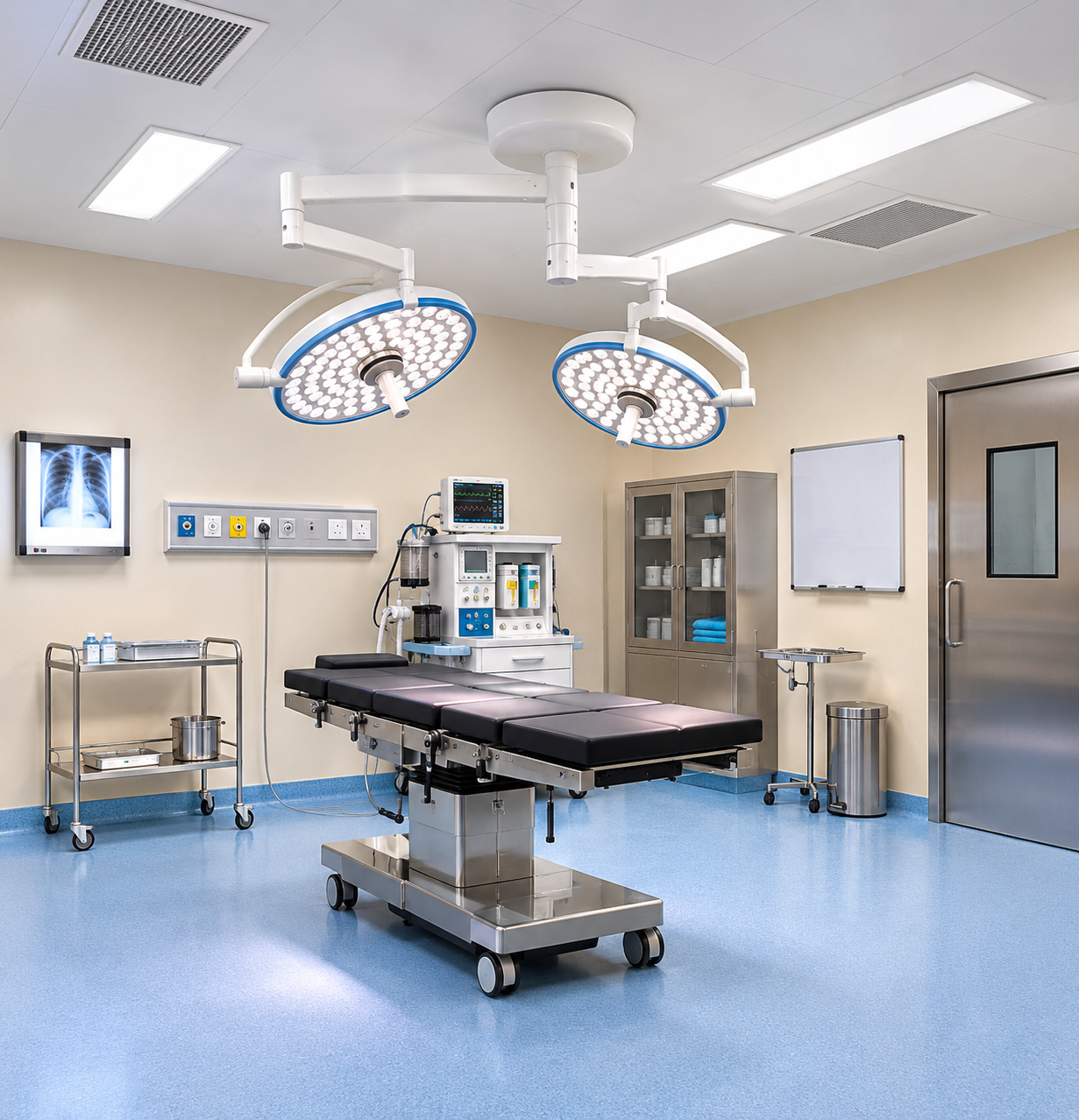
Conventional Operation Theatre
Designed with hygienic wall and ceiling finishes, proper lighting, medical gas systems and essential surgical equipment provisions for a safe operating environment.
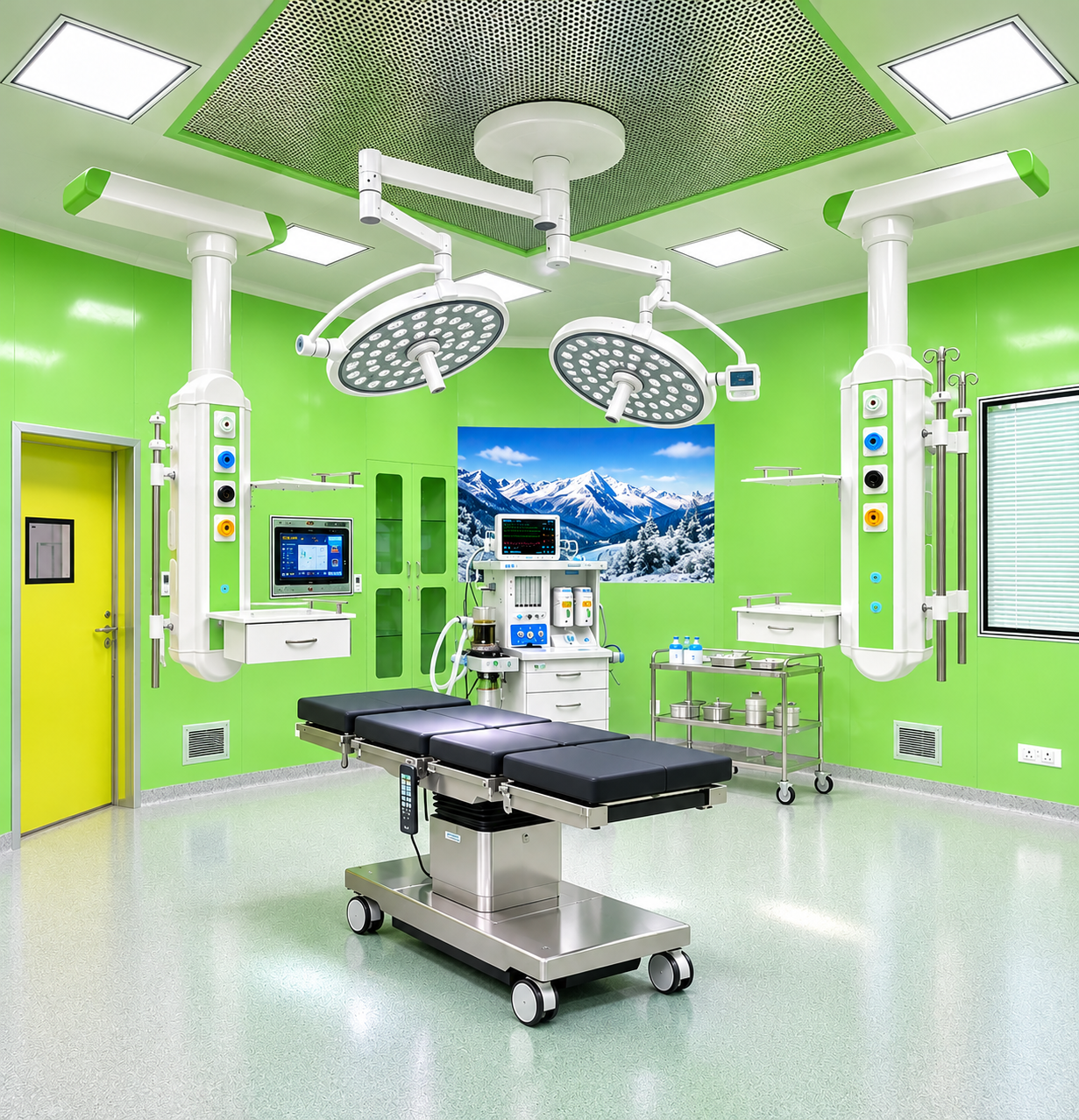
Modular Operation Theatre
Designed with modular wall and ceiling panels, seamless joints, hygienic surfaces and provisions for medical gas, electrical systems, surgical lighting and laminar airflow integration.
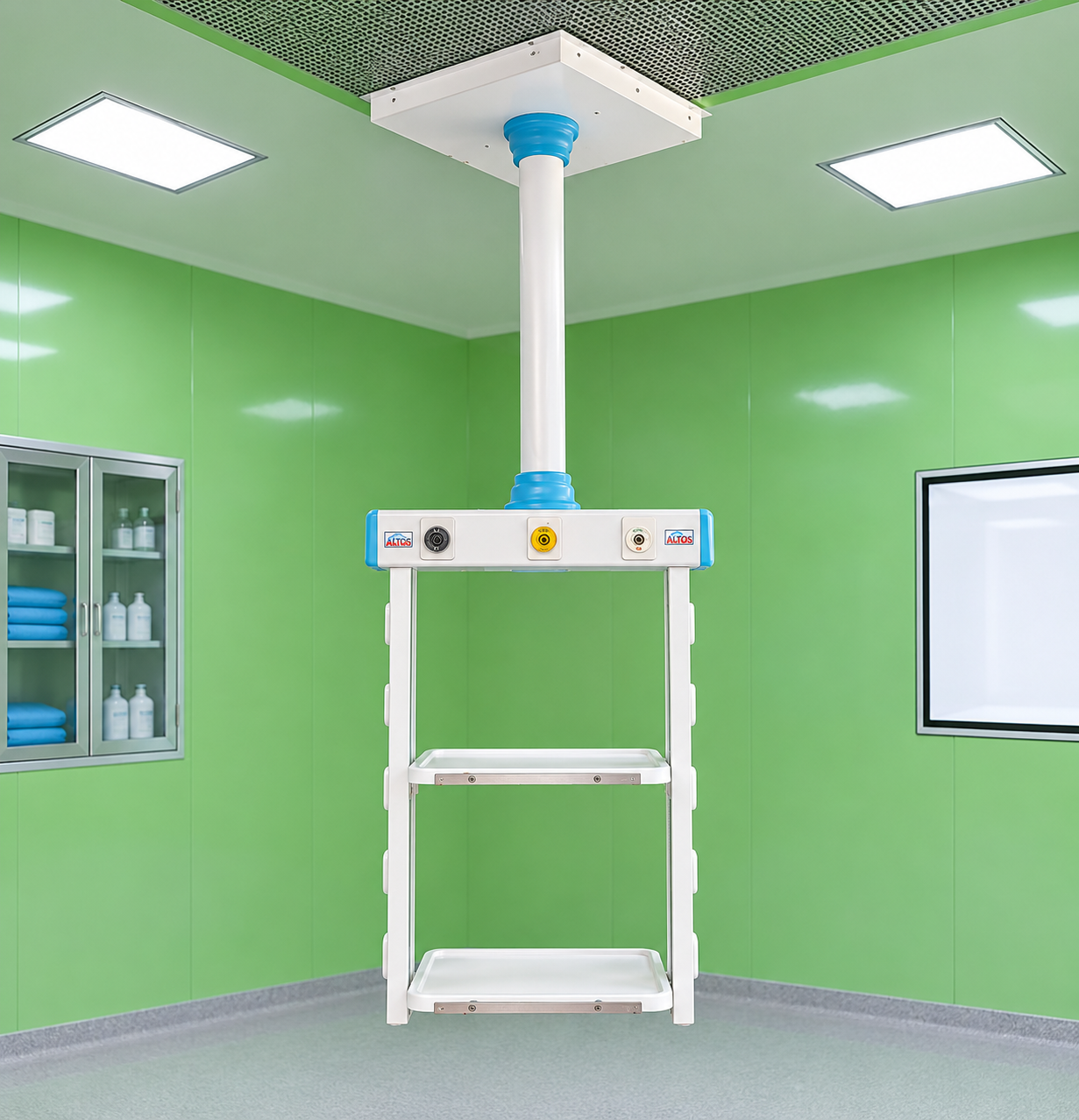
Fixed Pendant
Ceiling-mounted medical pendant with fixed structure, medical gas outlets, electrical sockets, equipment shelves and provision for mounting essential medical accessories.
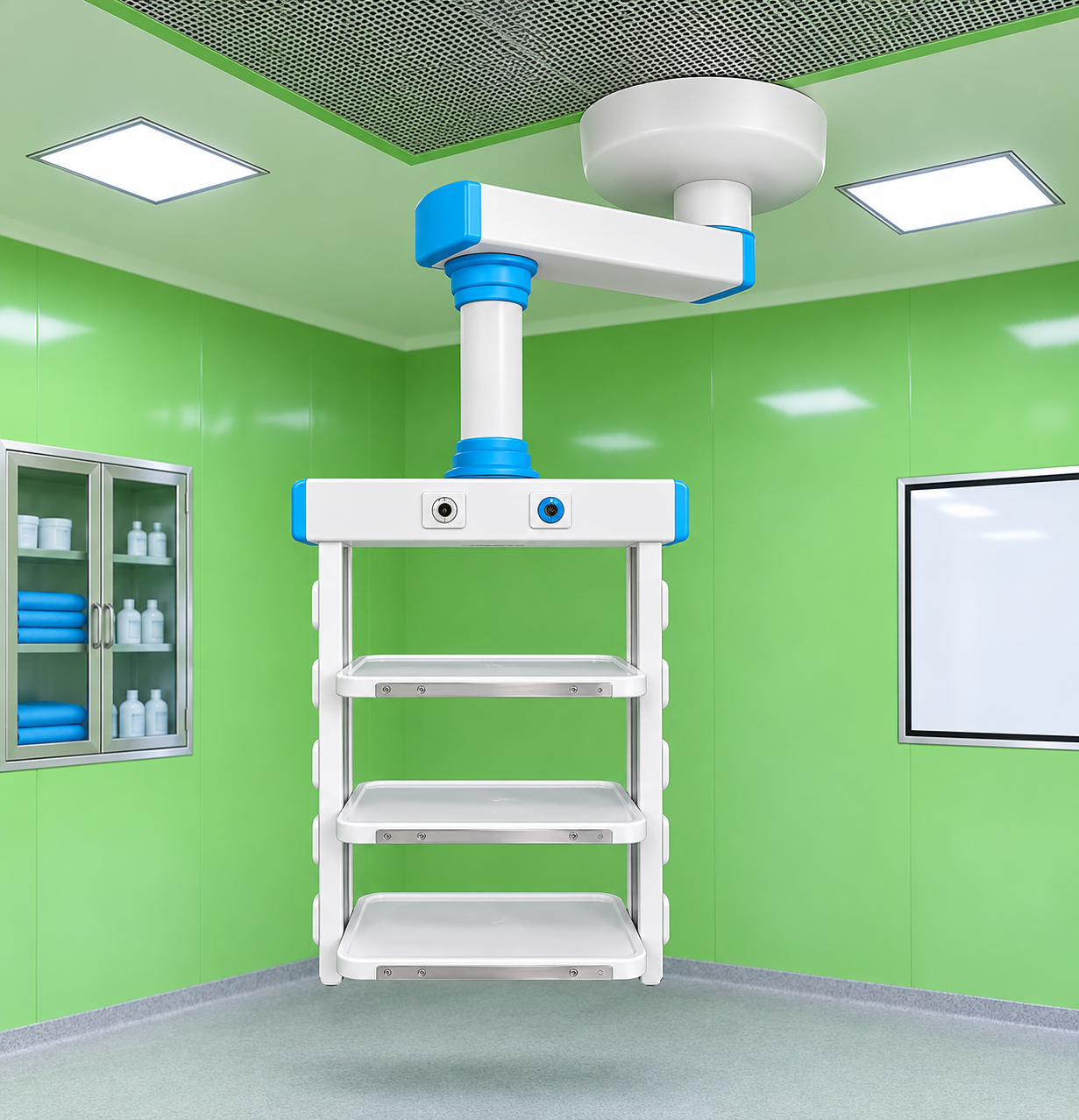
Single Arm Laparoscopic Pendant
Ceiling-mounted single arm pendant with 360-degree rotation, medical gas outlets, electrical sockets, equipment shelves and provision for laparoscopic instruments.
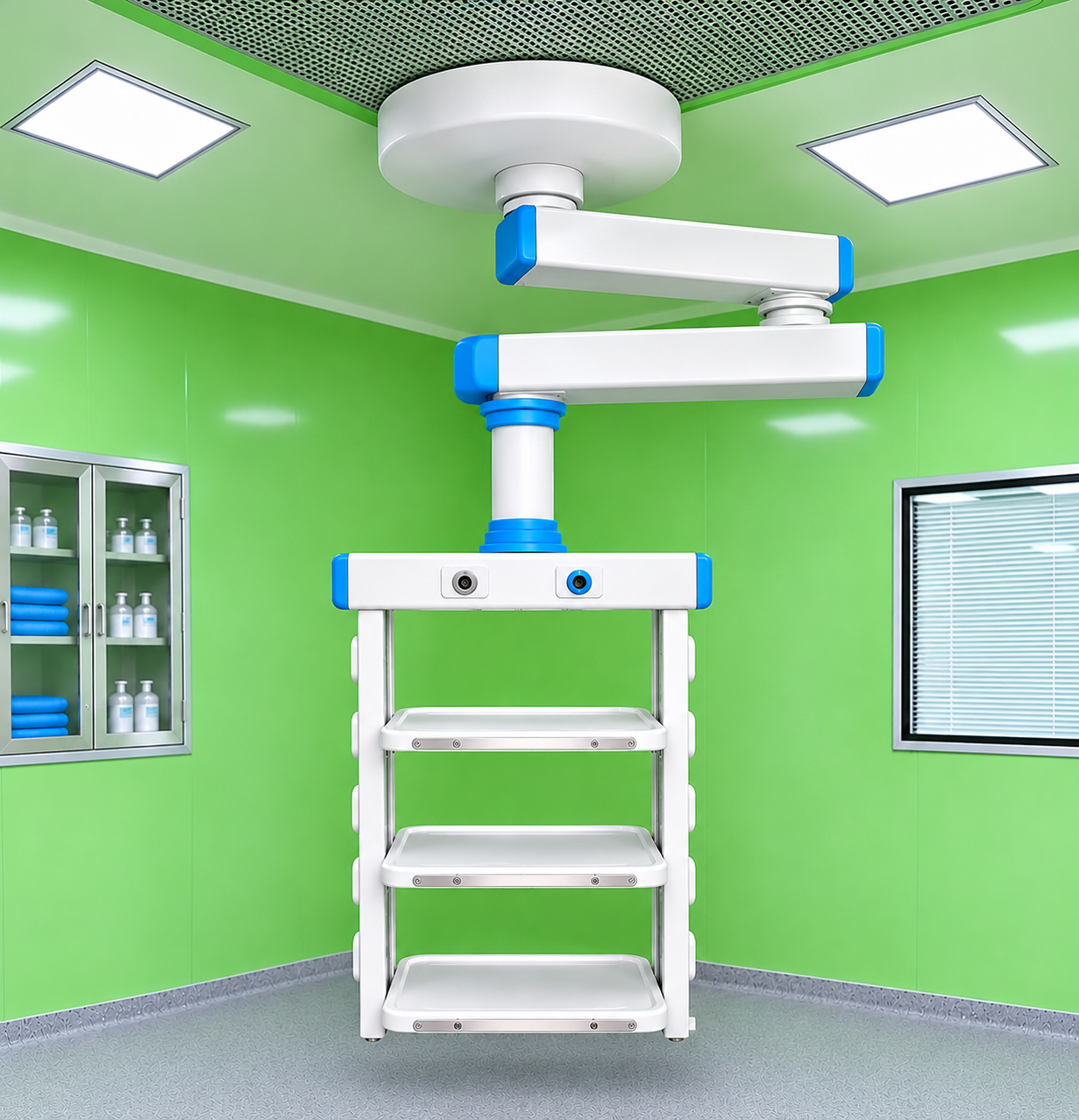
Double Arm Laparoscopic Pendant
Dual-arm ceiling-mounted pendant with independent movement, medical gas outlets, electrical sockets, equipment shelves and provisions for mounting laparoscopic equipment.
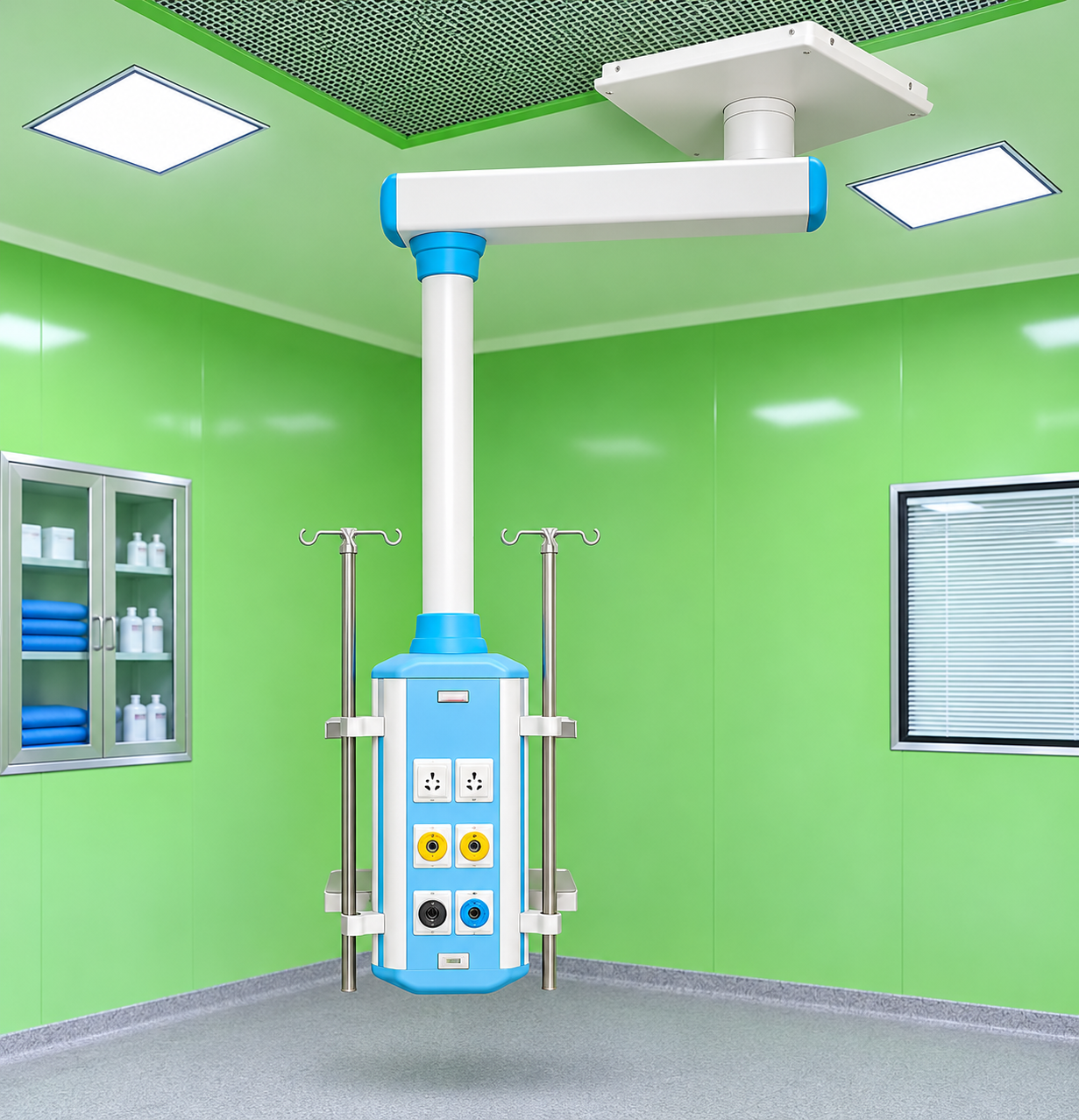
Modular Single Arm Pendant
Modular ceiling-mounted single arm pendant with smooth rotation, integrated medical gas outlets, electrical sockets, equipment shelves and accessory mounting provisions.
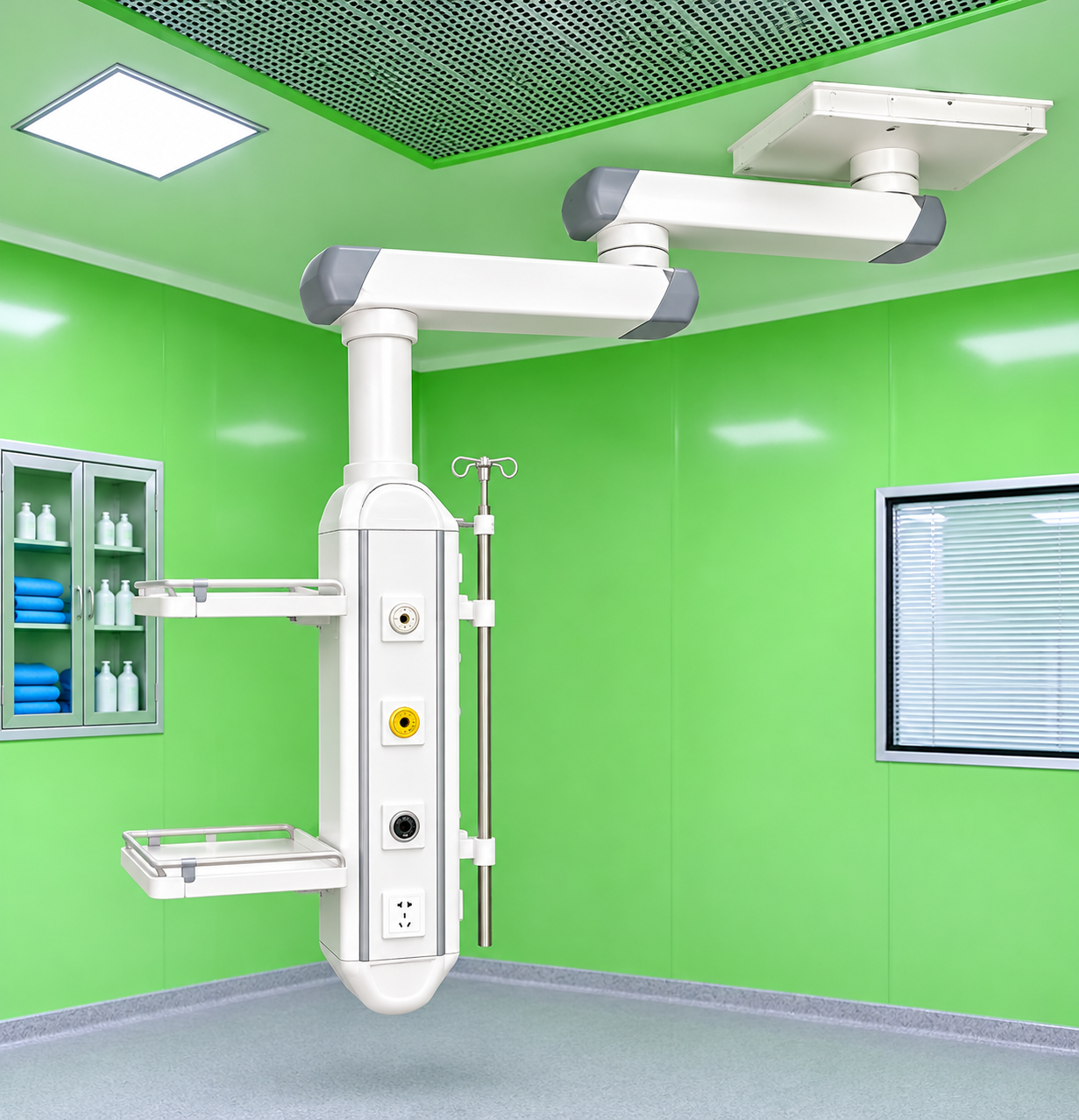
Modular Double Arm Pendant
Modular dual-arm ceiling-mounted pendant with flexible positioning, integrated medical gas outlets, electrical sockets, equipment shelves and medical accessory provisions.
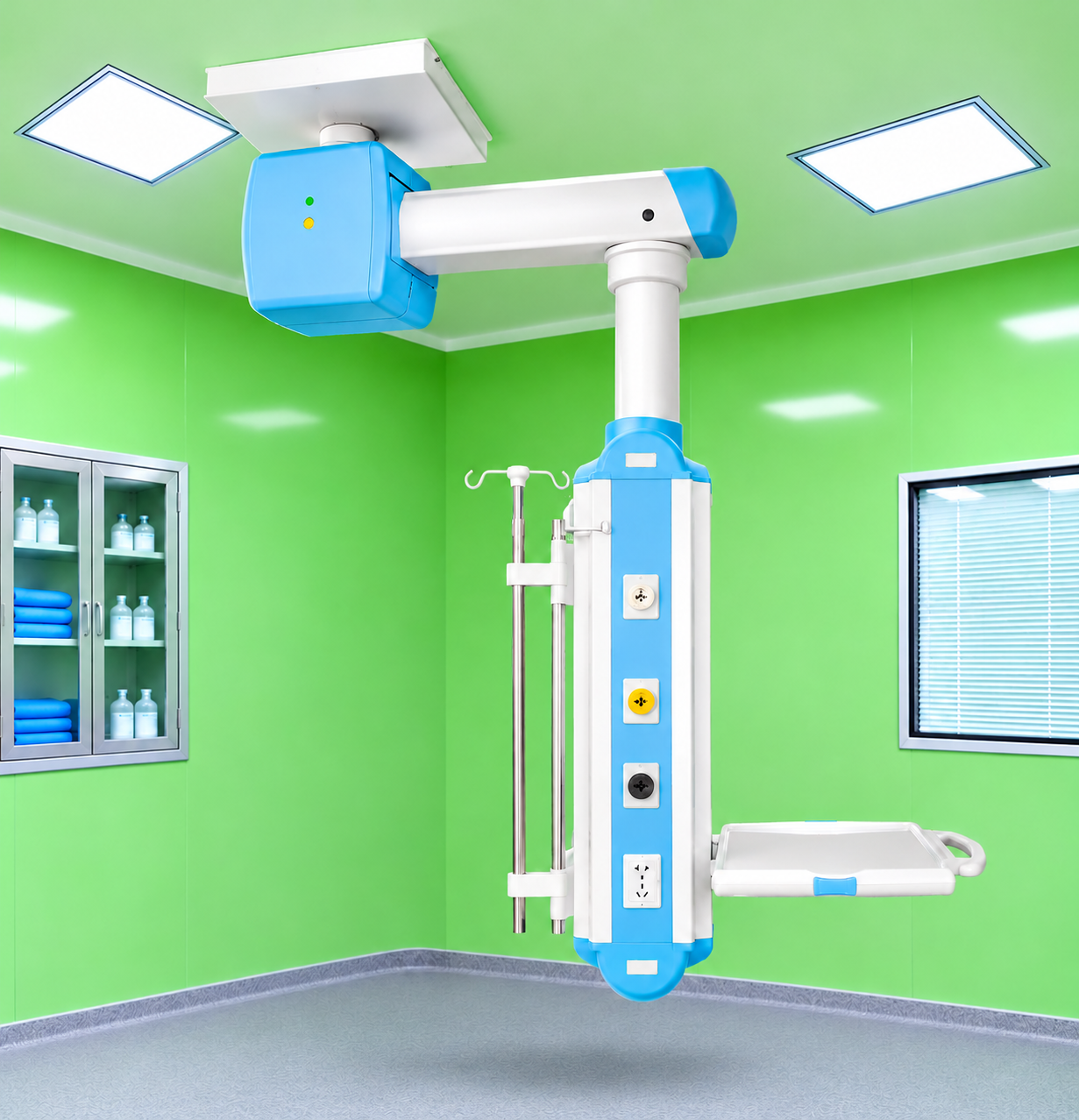
Modular Motorized Single Arm Pendant
Motorized ceiling-mounted single arm pendant with electrically controlled height adjustment, smooth movement, medical gas outlets, electrical sockets and equipment mounting provisions.
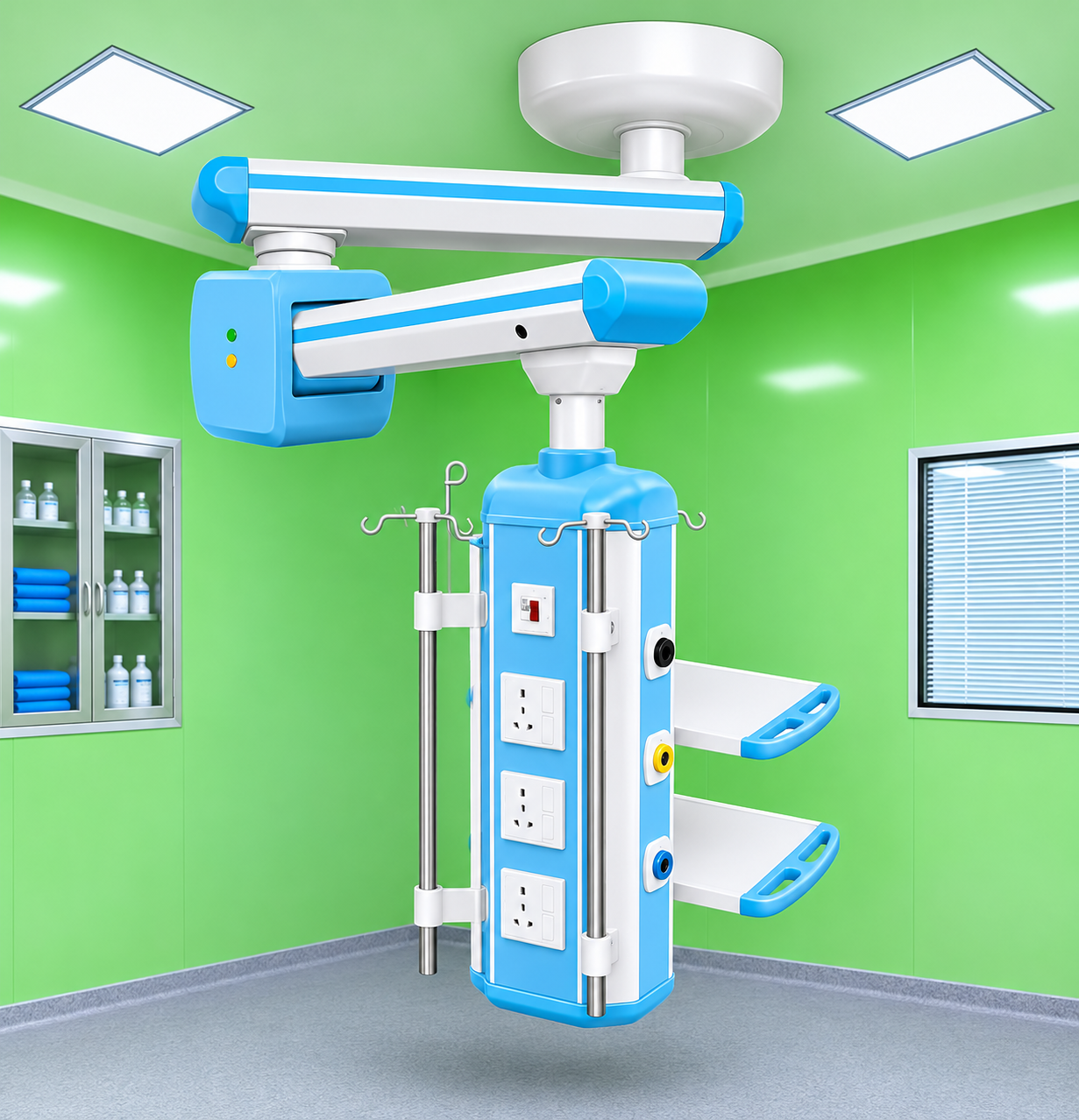
Modular Motorized Double Arm Pendant
Motorized dual-arm ceiling-mounted pendant with electrically controlled positioning, independent arm movement, medical gas outlets, electrical sockets and equipment shelves.
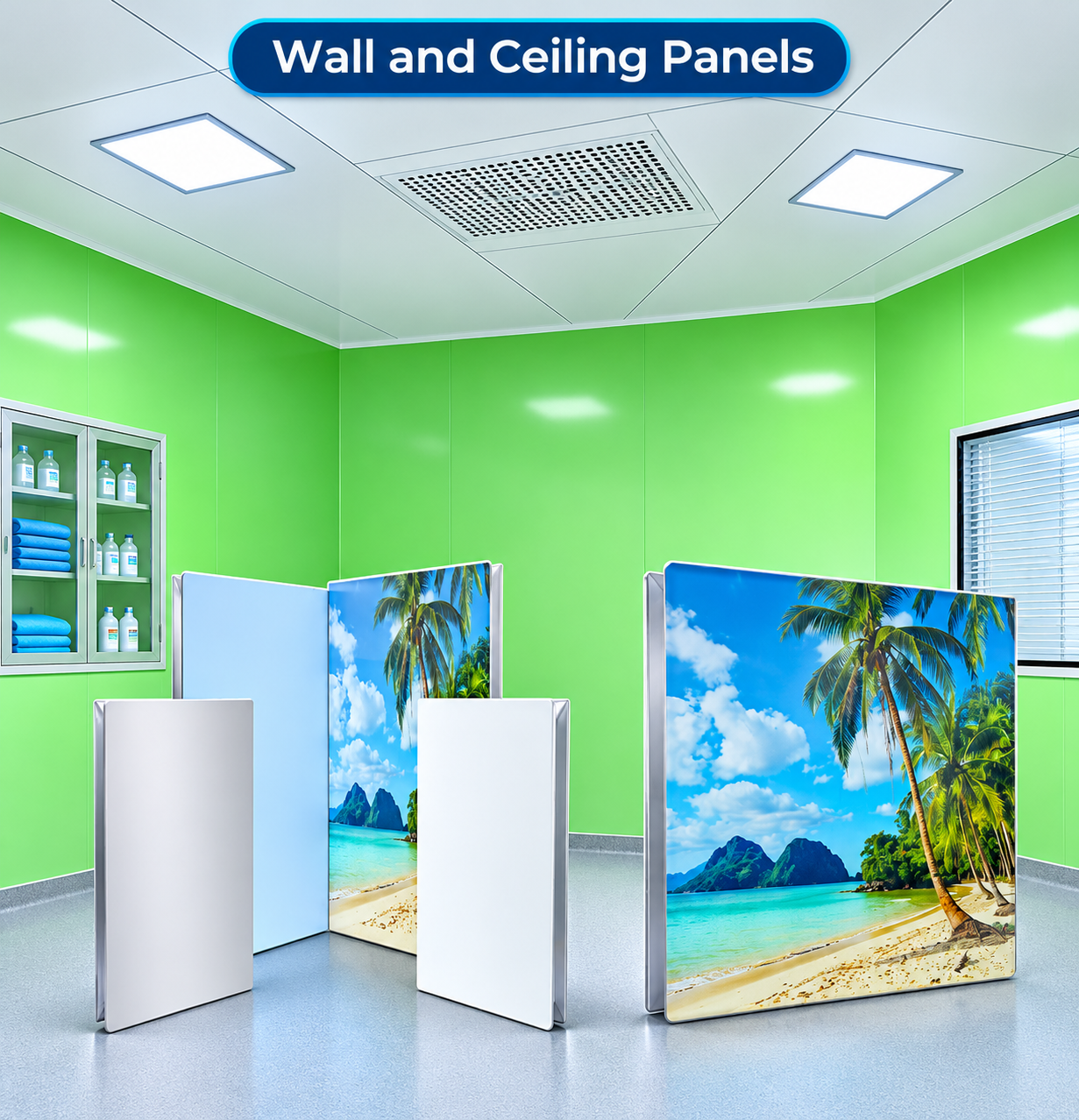
Wall and Ceiling Panels
Manufactured using high-quality modular panels with smooth, seamless and easy-to-clean surfaces, designed for hygienic environments and integration of medical equipment.
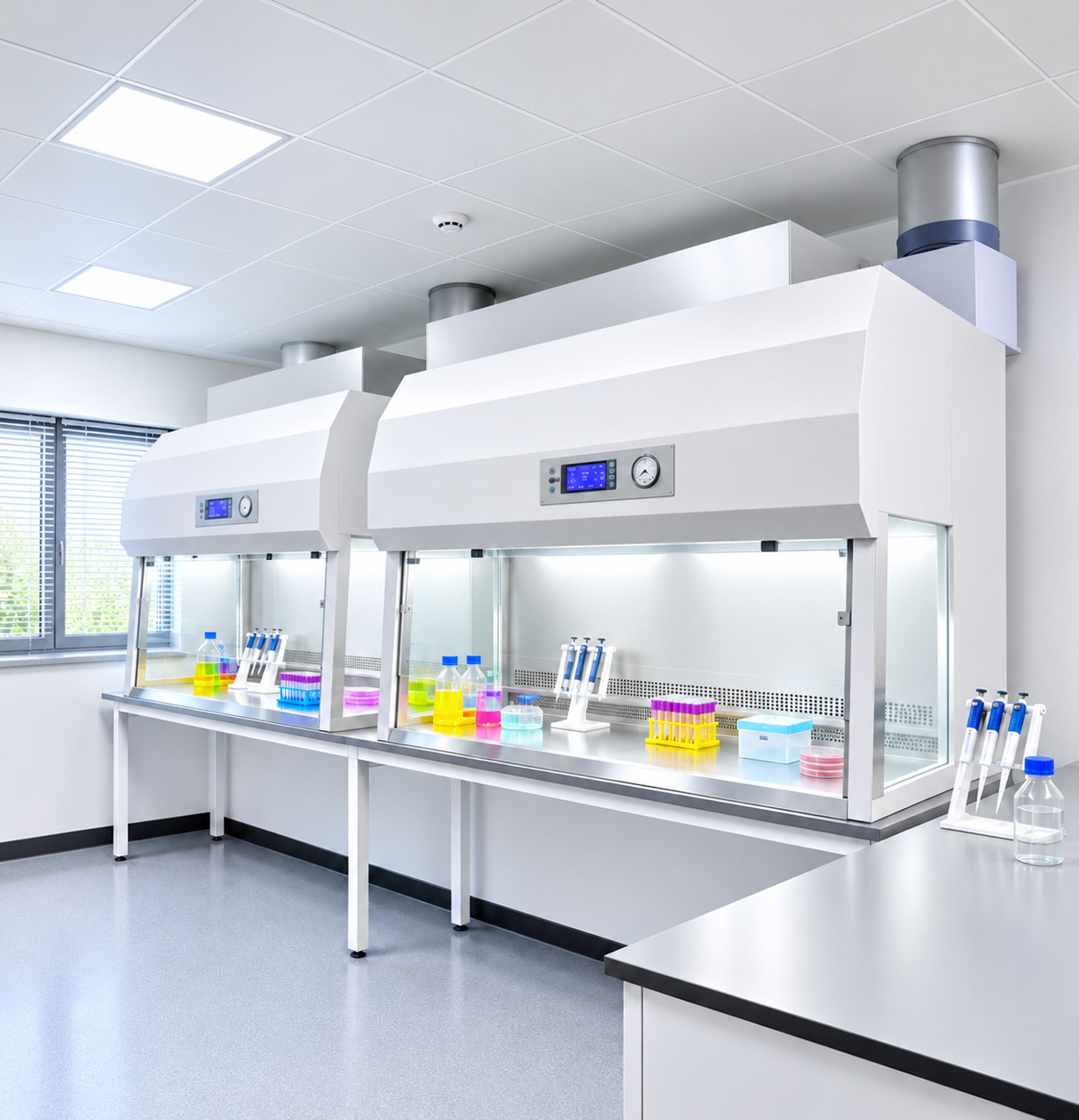
Laminar Air Flow
Designed to provide controlled unidirectional airflow through high-efficiency HEPA filters, ensuring clean air distribution and reduced airborne contamination in the operation theatre.
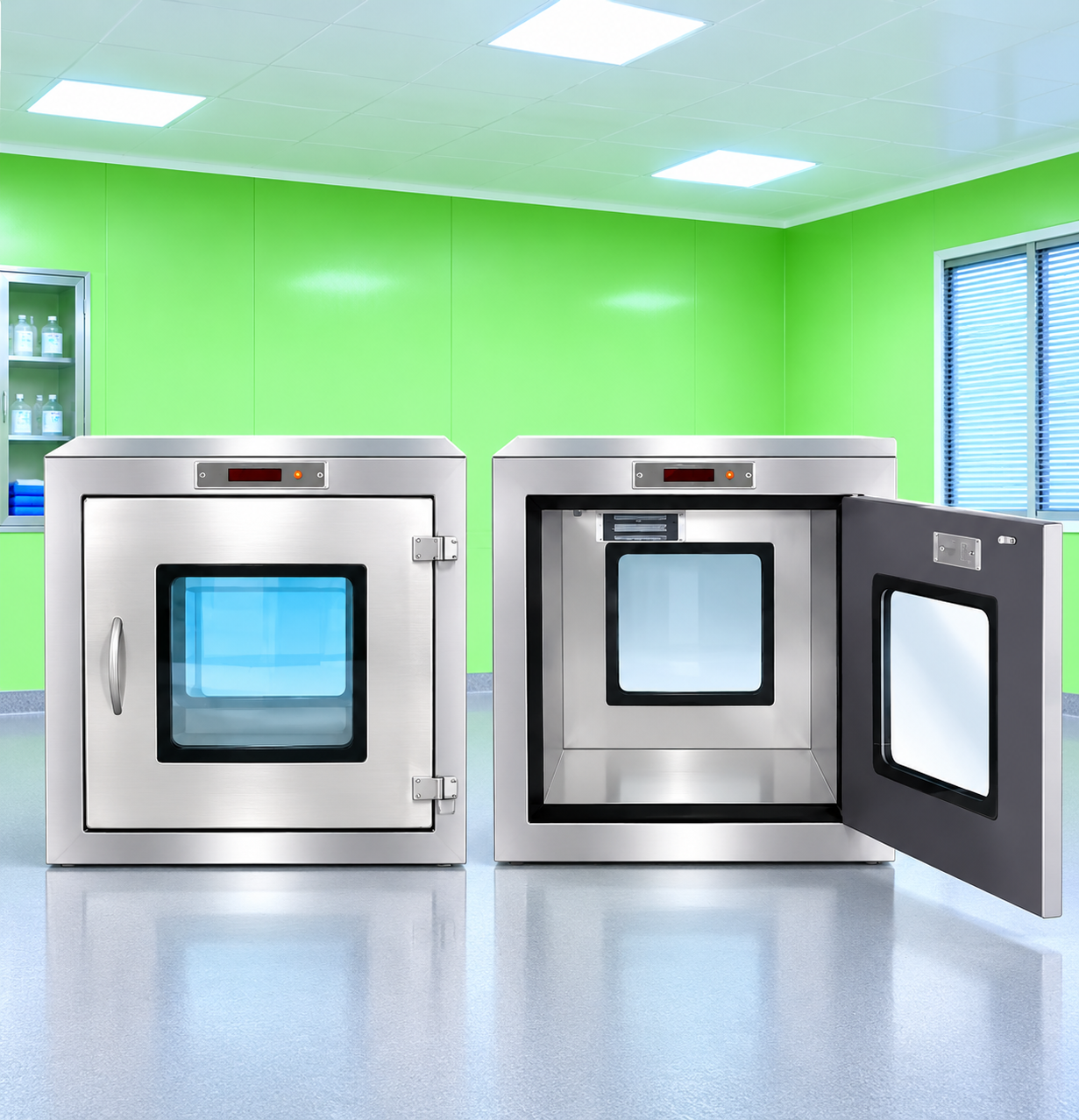
Hatch Box
Designed for the safe transfer of sterile materials and medical equipment between designated areas, featuring interlocking doors, smooth internal surfaces and hygienic construction.
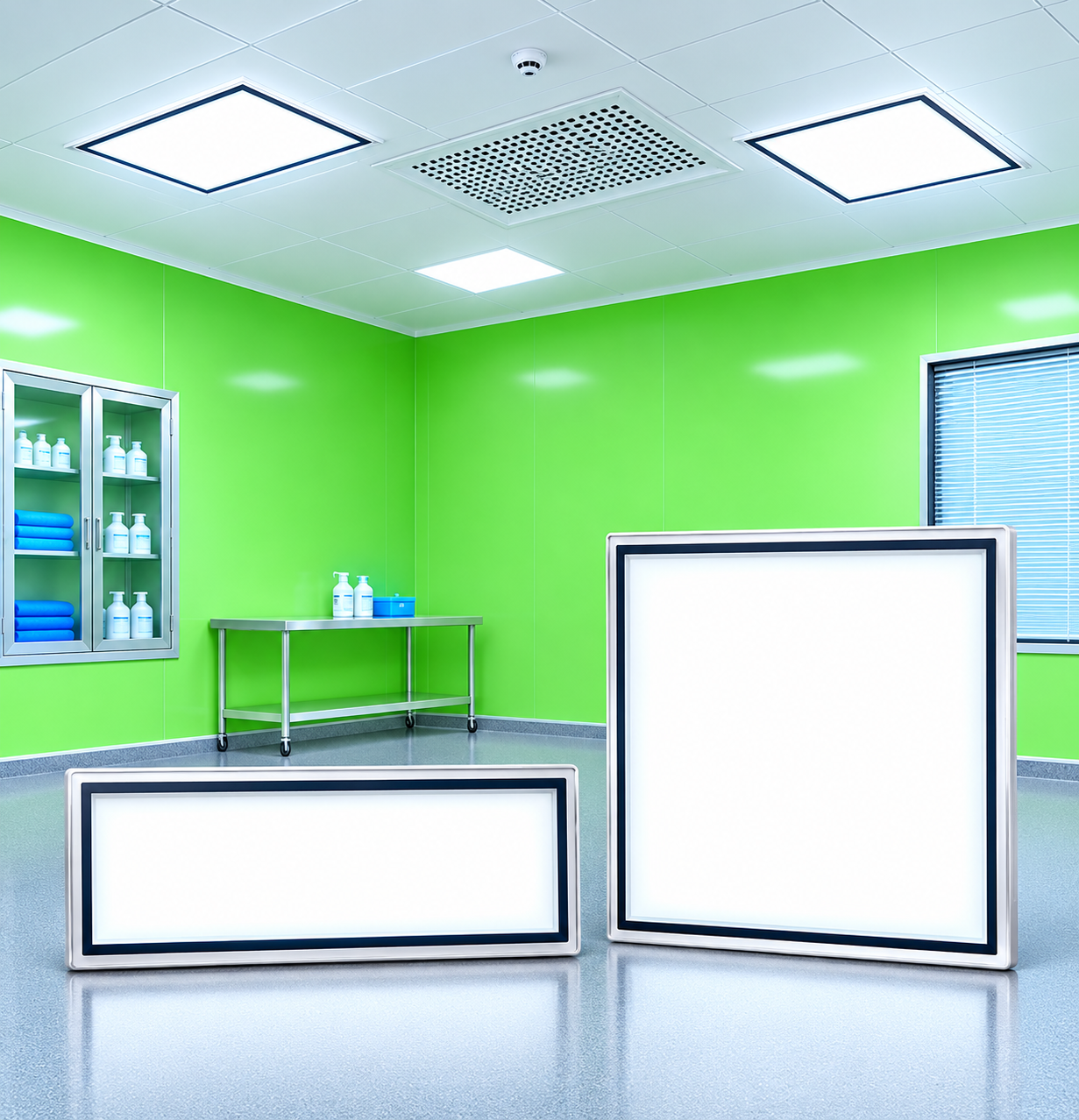
Peripheral Lights
Designed with energy-efficient LED lighting, providing uniform illumination around the operation theatre for enhanced visibility and improved working conditions.

X-Ray Board
Designed with a durable and smooth surface, providing a suitable platform for X-ray imaging applications with provisions for integration into the operation theatre setup.
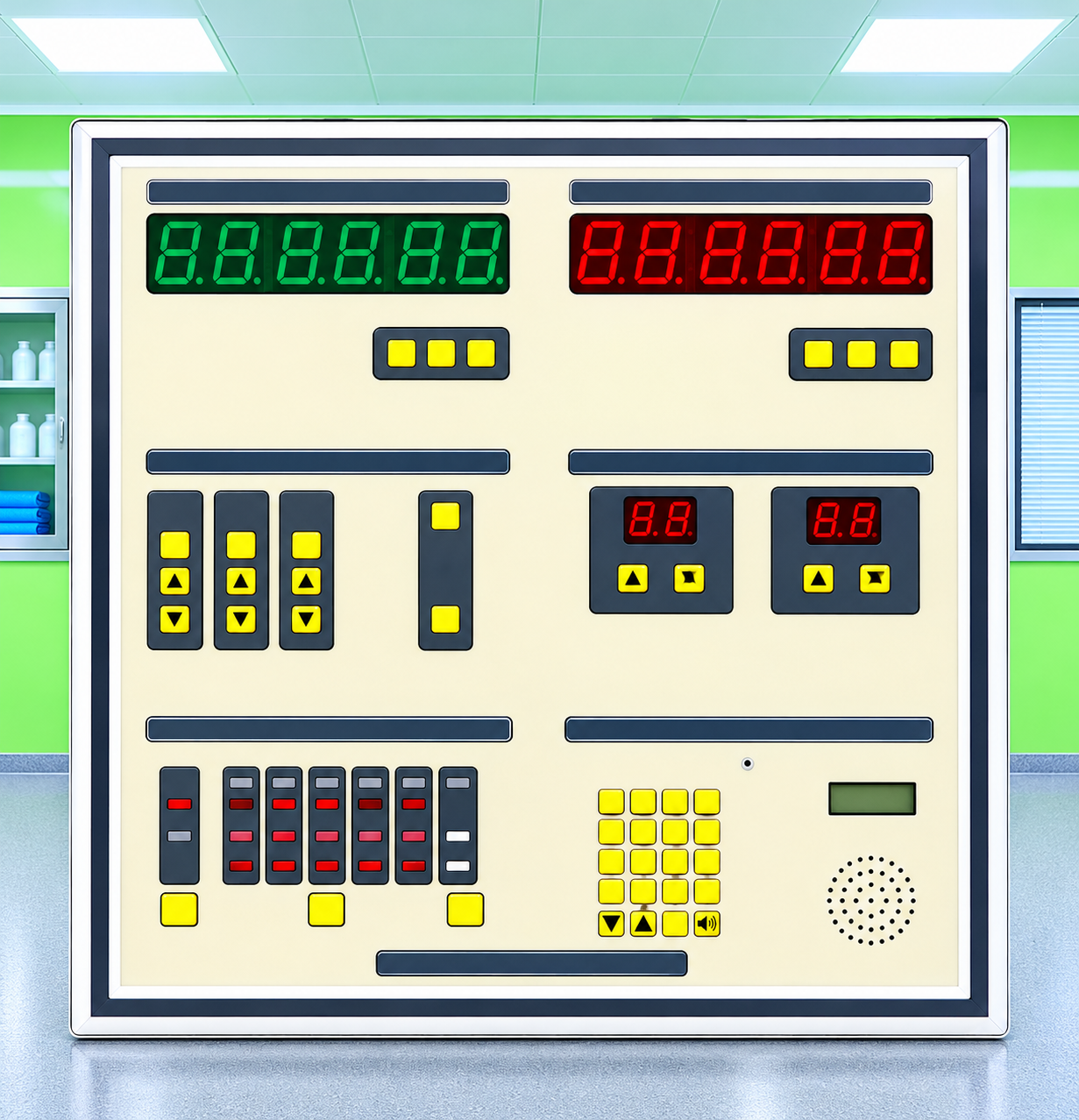
Surgeon Control Panel Manual
Wall-mounted manual control panel with switches and indicators for operating theatre functions such as lighting, temperature, humidity, pressure and other connected systems.
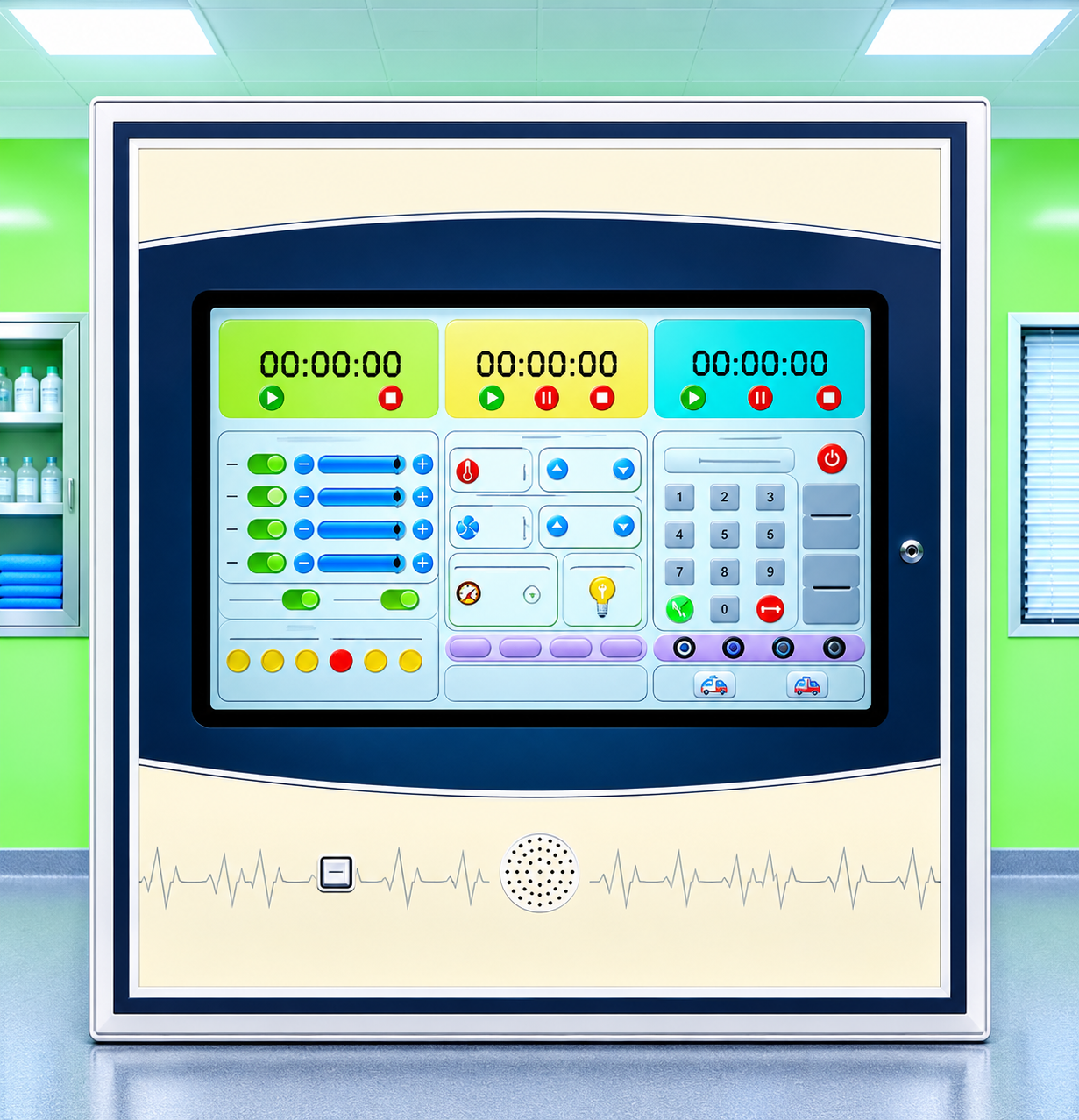
Surgeon Control Panel Touch
Advanced touch-screen control panel designed for centralized monitoring and operation of OT lighting, temperature, humidity, pressure, timers and other integrated systems.

Writing Board
Wall-mounted writing board with a smooth, durable and easy-to-clean surface, designed for displaying important surgical information, instructions and operational notes.
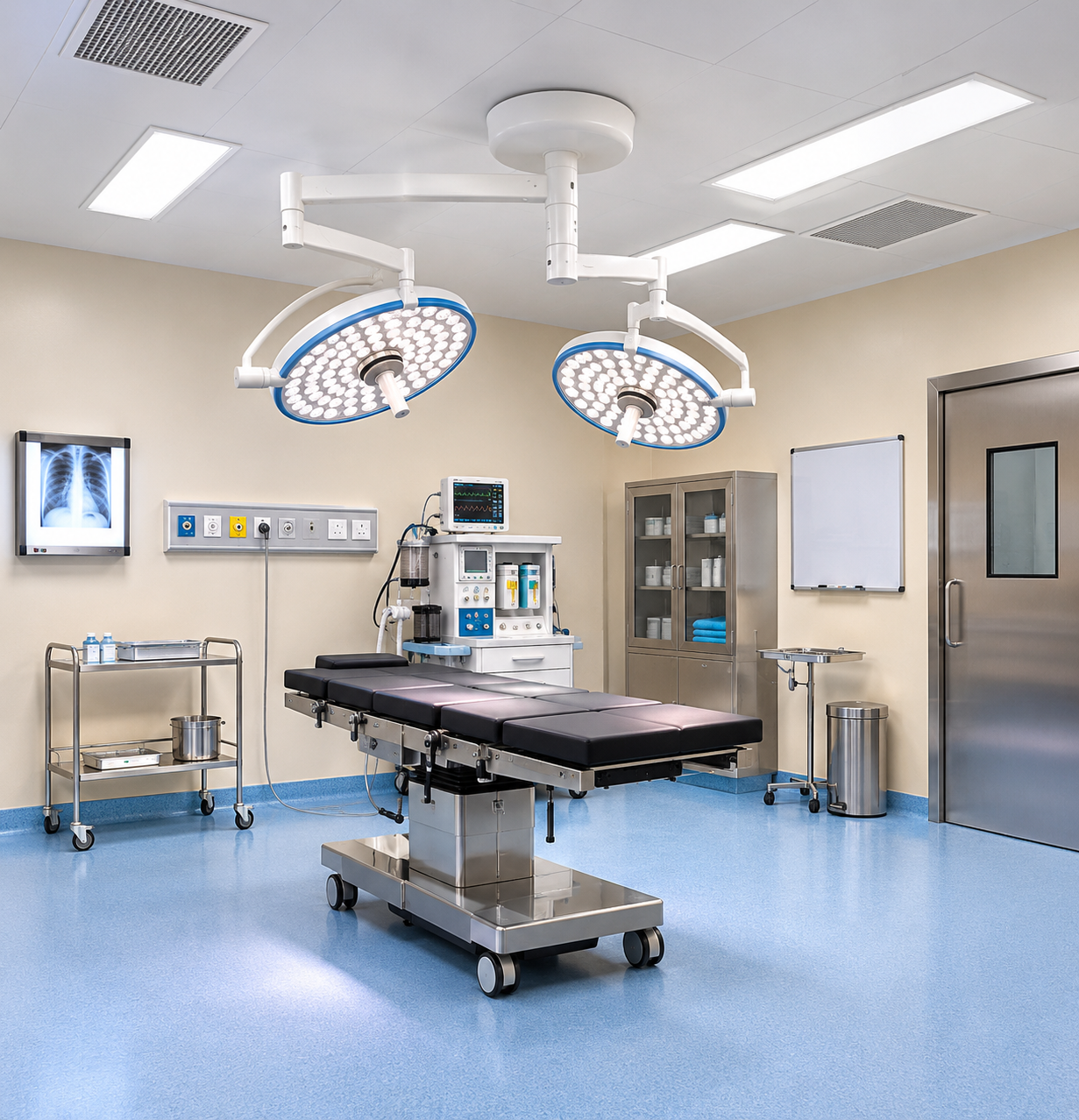
OT LED Surgical Lights
Advanced LED surgical lights with adjustable illumination, shadow reduction, colour temperature control and flexible positioning for optimal visibility during surgical procedures.
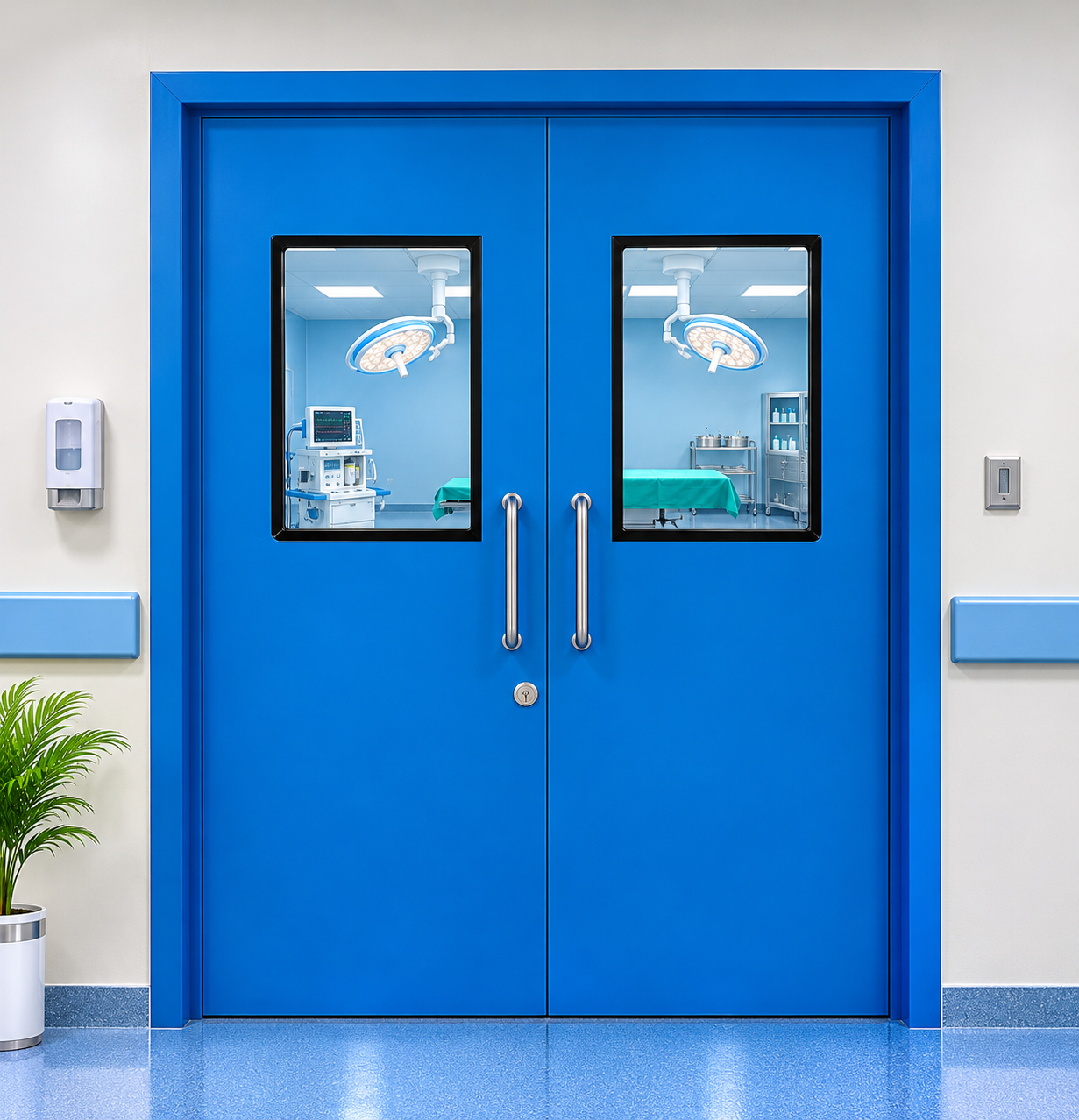
Swing Door
Designed with a durable door frame, smooth swinging mechanism, flush double-glazing glass, high-quality hardware, door closure, D-handles and ball-bearing butt hinges for convenient operation and hygienic use.
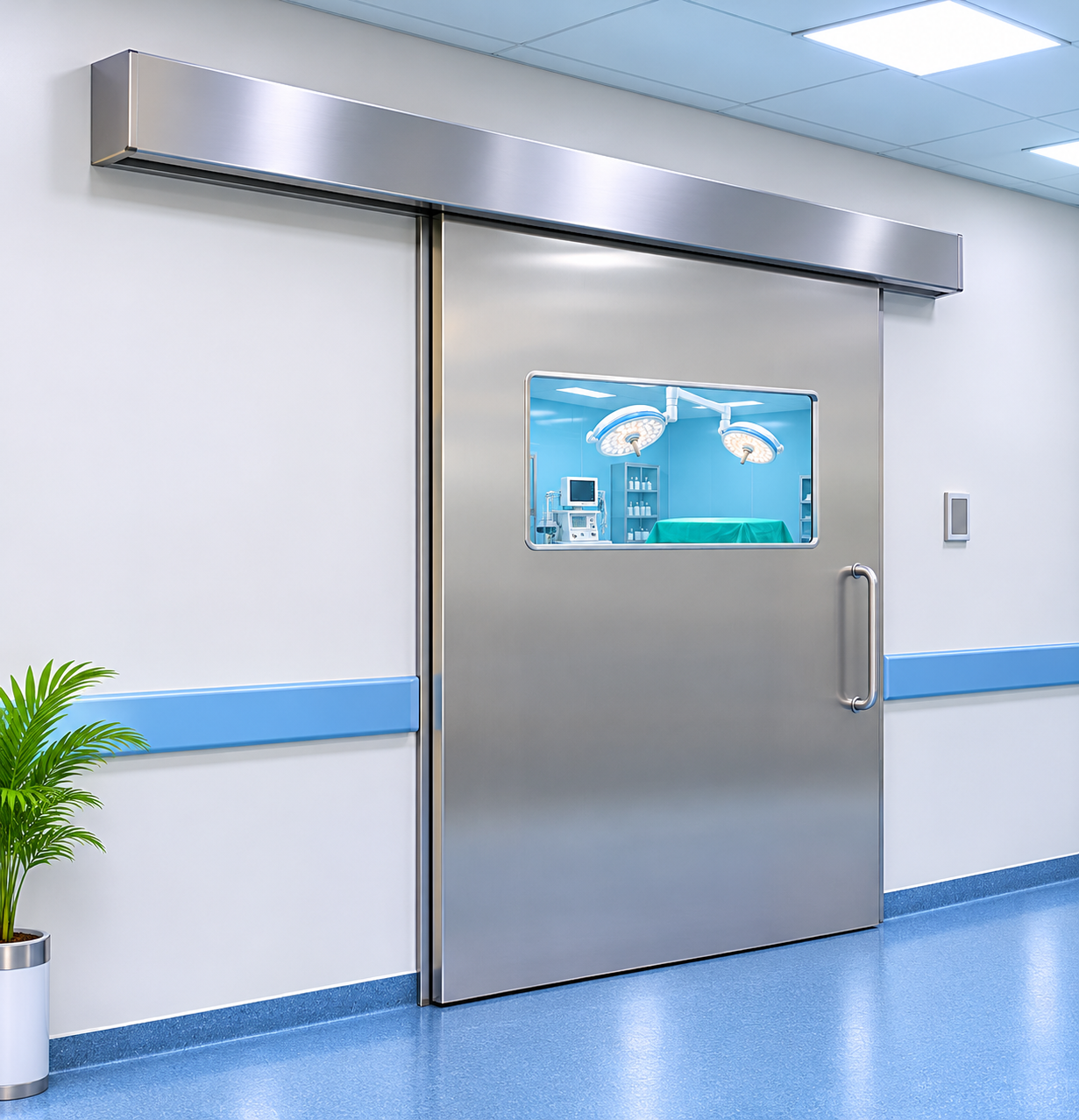
Manual Sliding Door
Manually operated sliding door with a smooth sliding mechanism, durable construction, flush double-glazing glass, ergonomic D-handles and provisions for proper sealing to ensure smooth and reliable operation.
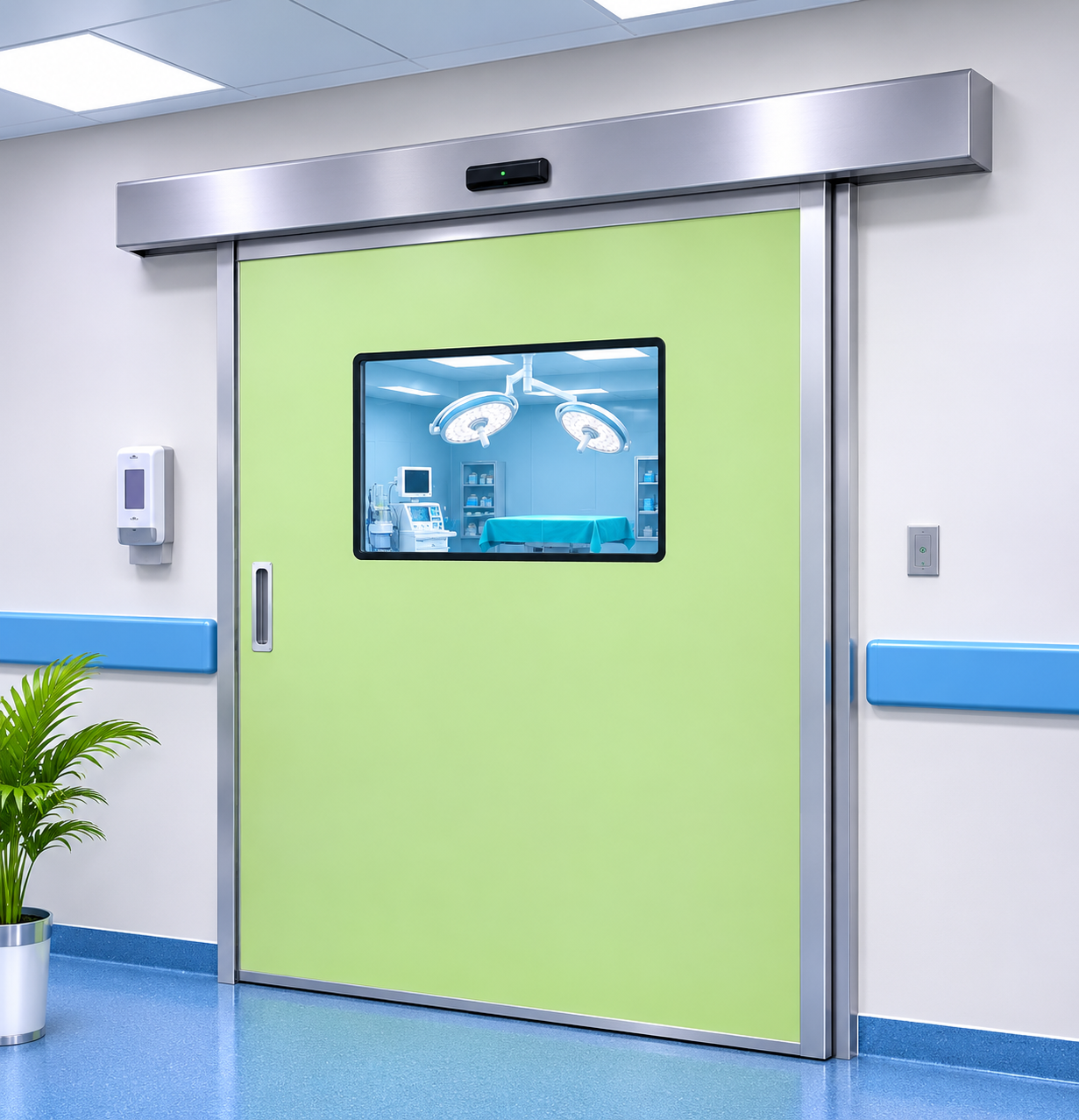
Automatic Sliding Door
Advanced automatic sliding door with sensor-based operation, smooth opening and closing mechanism, flush double-glazing glass, safety sensors, automatic control system and provisions for airtight sealing.
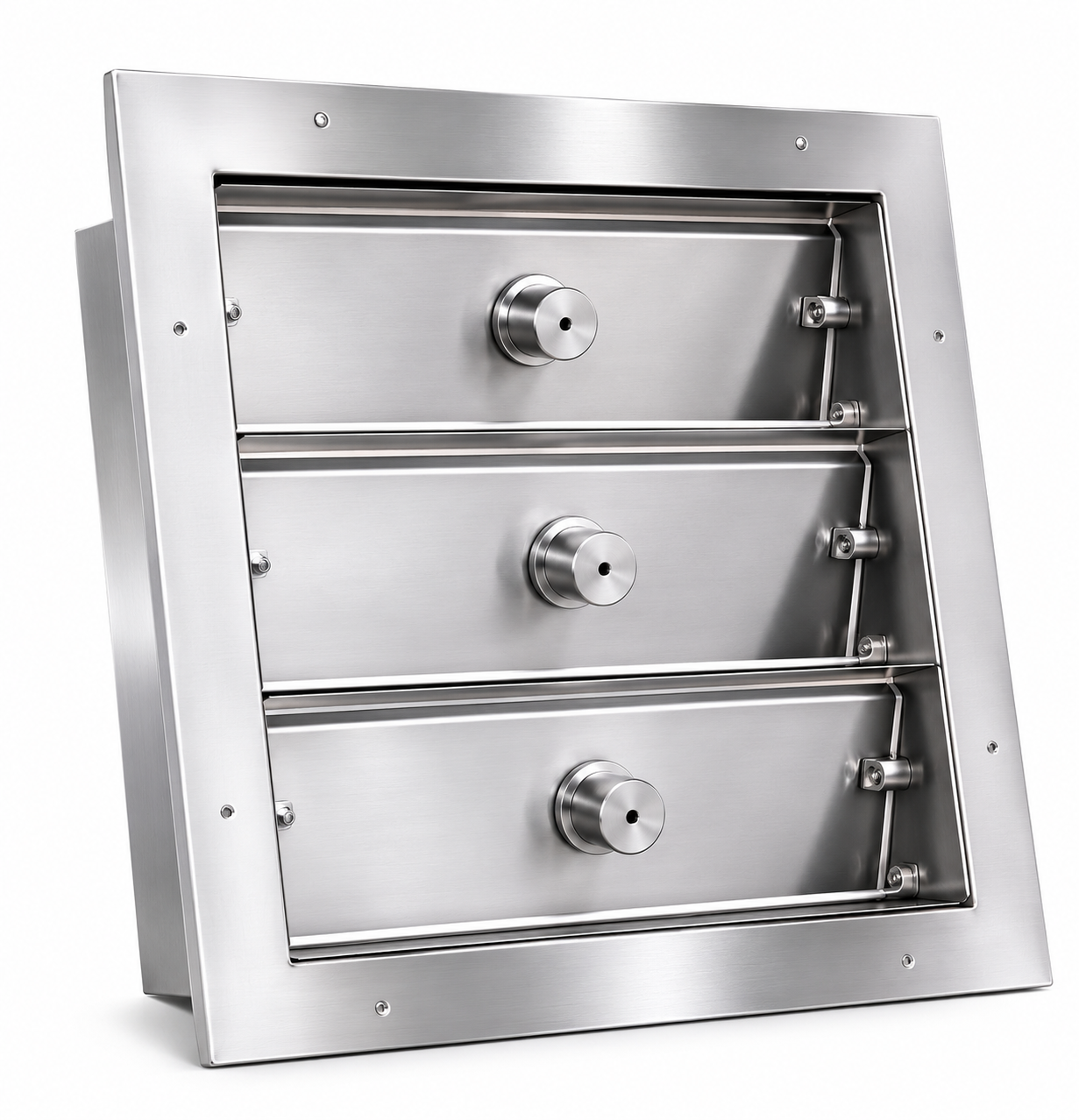
Pressure Relief Damper
Designed to maintain positive pressure balance inside the operation theatre by regulating excess air pressure, featuring adjustable airflow control and durable construction.
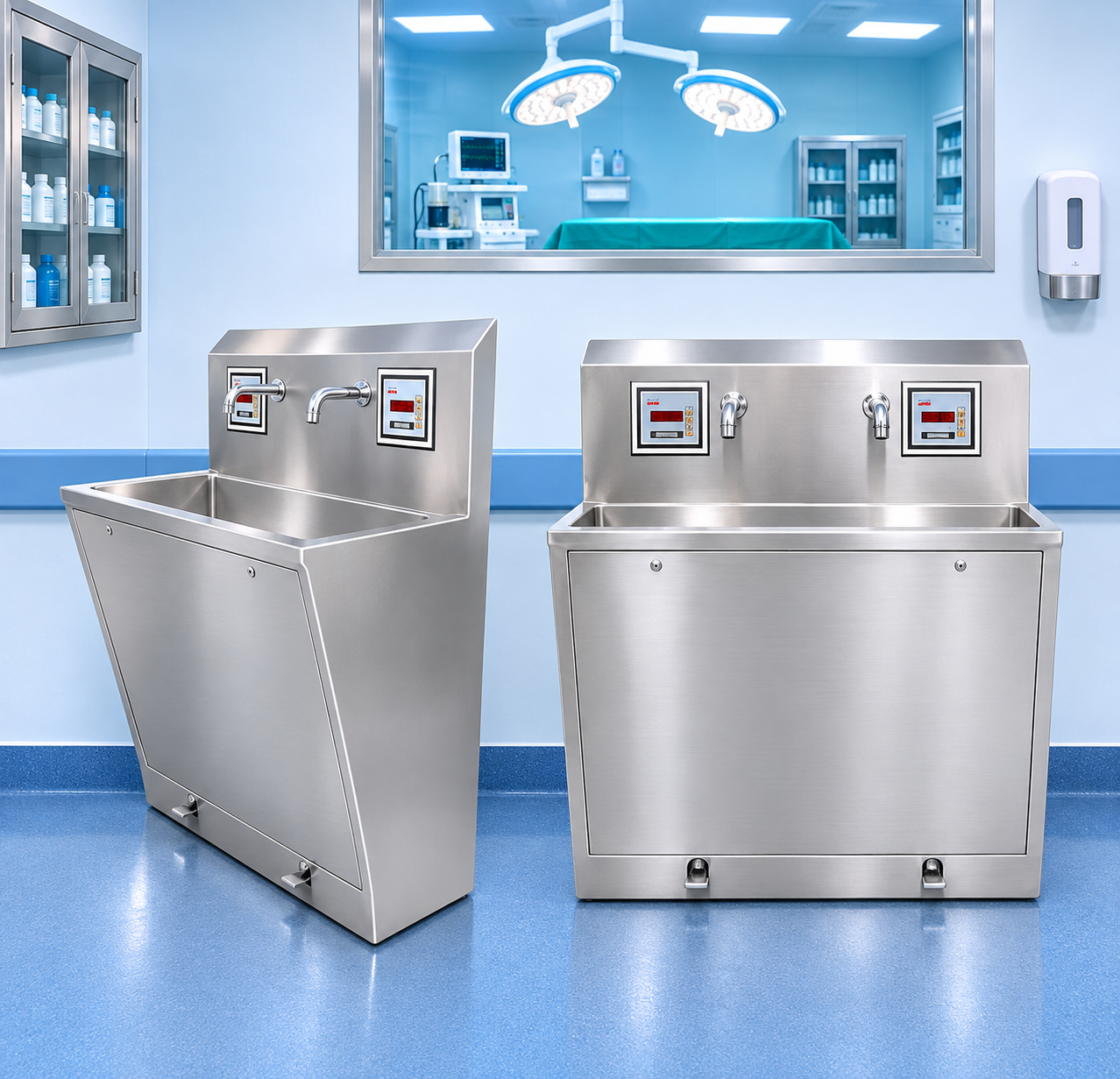
Surgical Scrub Sinks
Manufactured using high-quality stainless steel with hygienic seamless construction, sensor-operated or knee-operated water controls and provisions for hands-free surgical scrubbing.
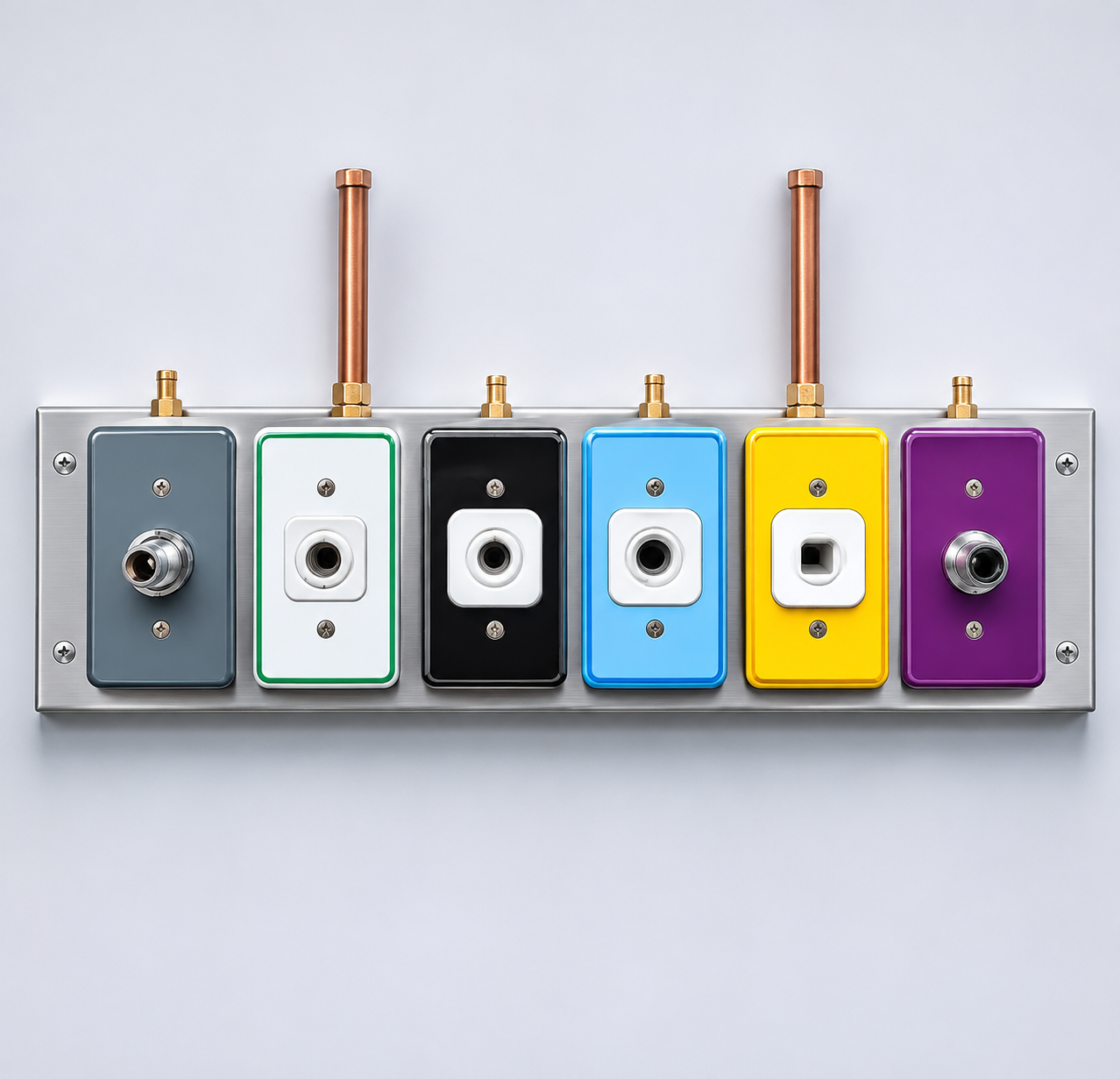
Terminal Units / Gas Outlets
Designed for safe and reliable delivery of medical gases, featuring colour-coded identification, secure connections and compatibility with specified medical gas pipeline systems.
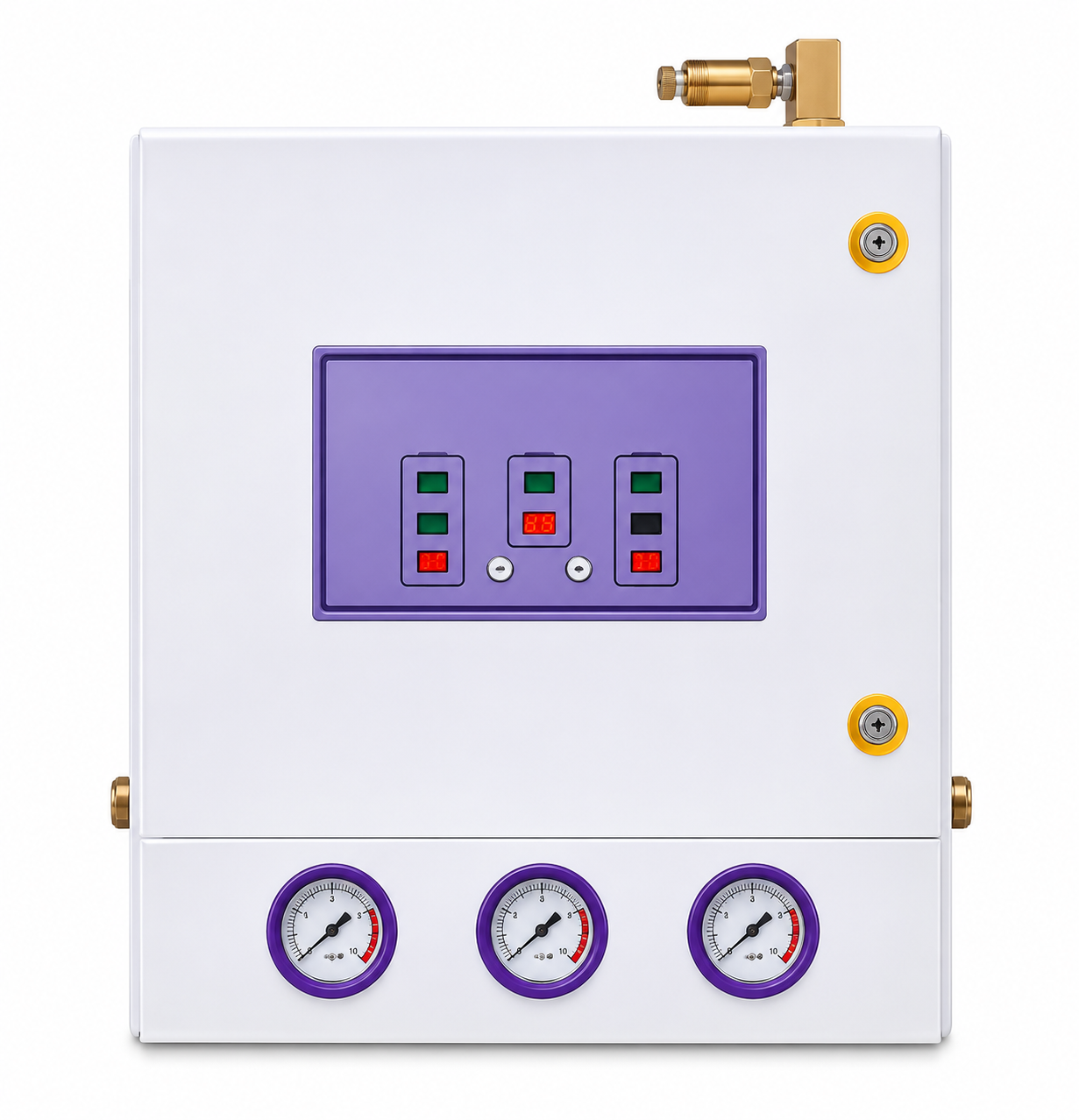
Gas Control Unit
Designed for monitoring and controlling medical gas supply, featuring pressure gauges, isolation valves, pressure regulators and necessary safety provisions.
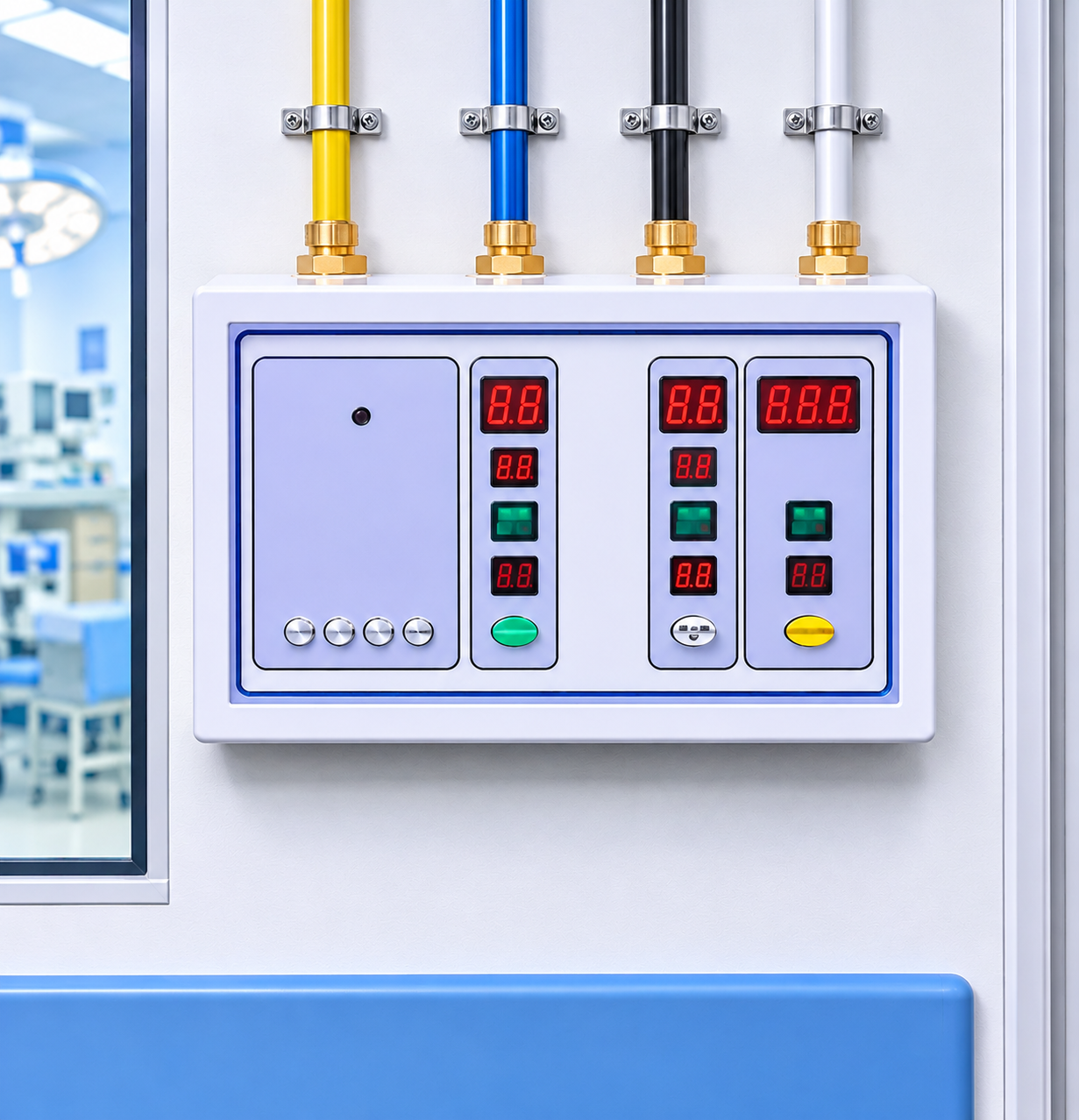
Gas Alarm System
Advanced medical gas alarm system with visual and audible alerts, designed to monitor gas pipeline pressure and indicate abnormal pressure conditions.
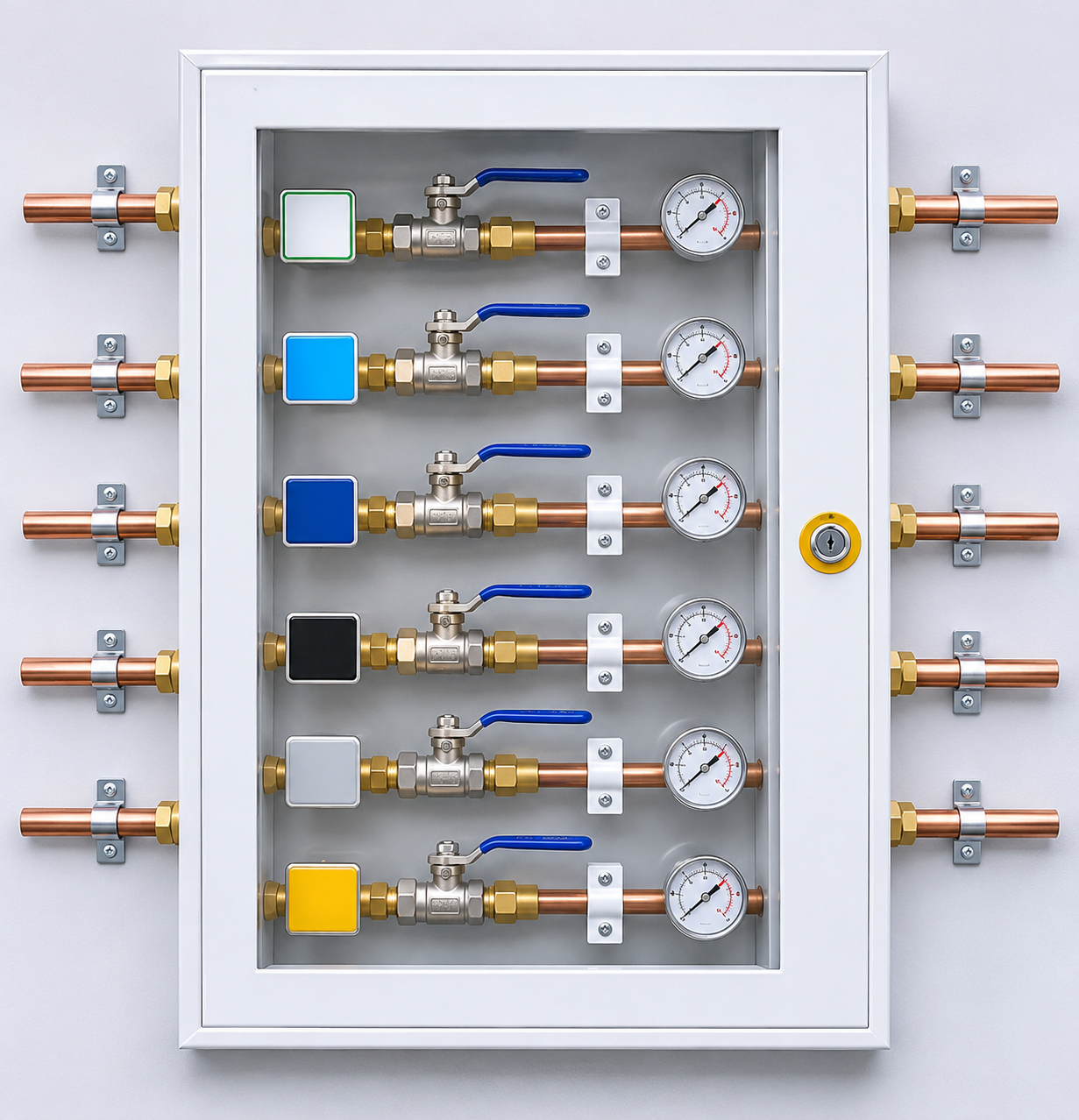
Zonal Valve Box
Designed for controlling and isolating medical gas supply to specific hospital zones, featuring accessible isolation valves, pressure monitoring and transparent viewing panels.
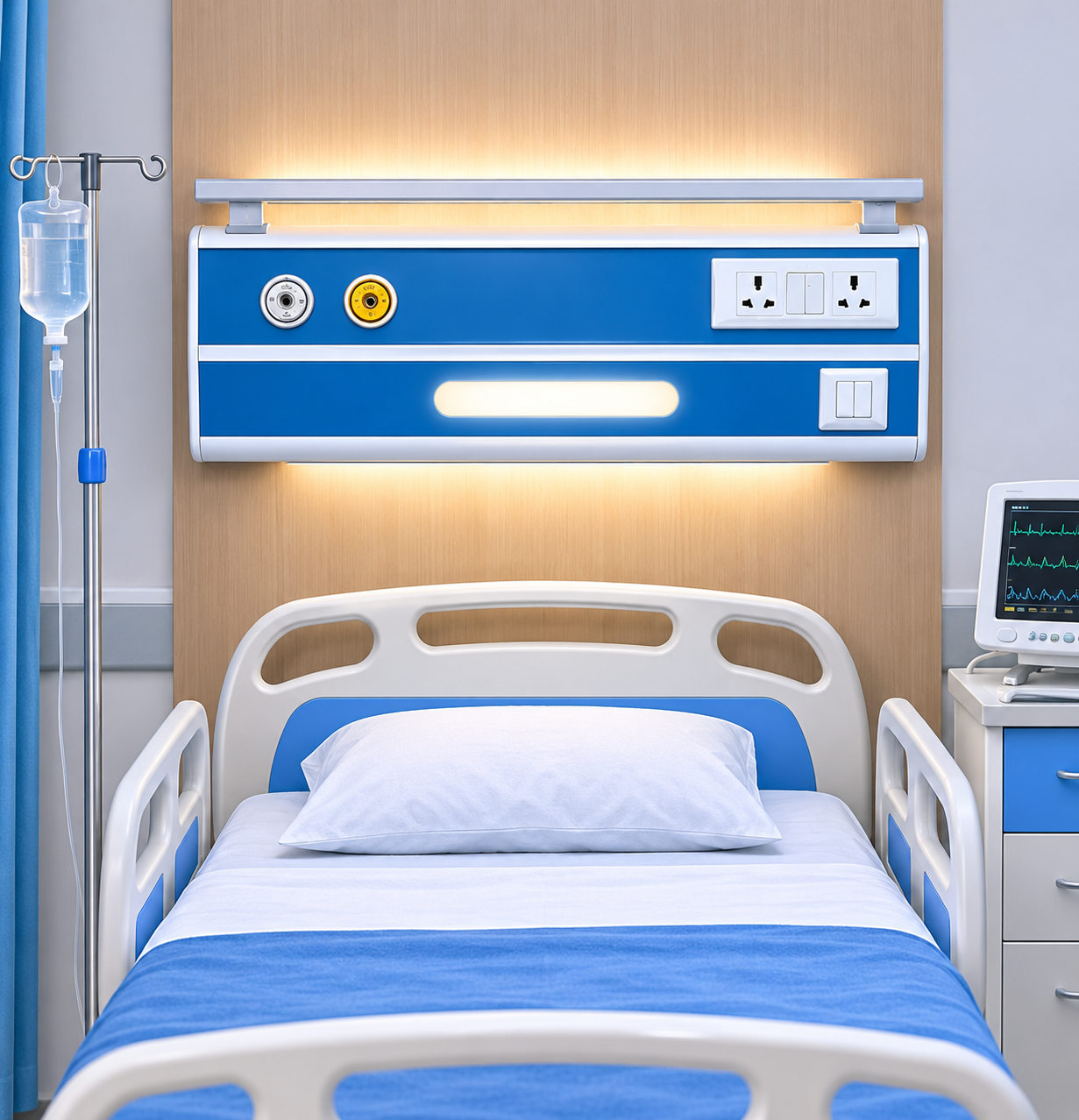
Bed Head Panel
Wall-mounted bed head panel with integrated medical gas outlets, electrical sockets, nurse call provisions and mounting arrangements for essential patient care accessories.
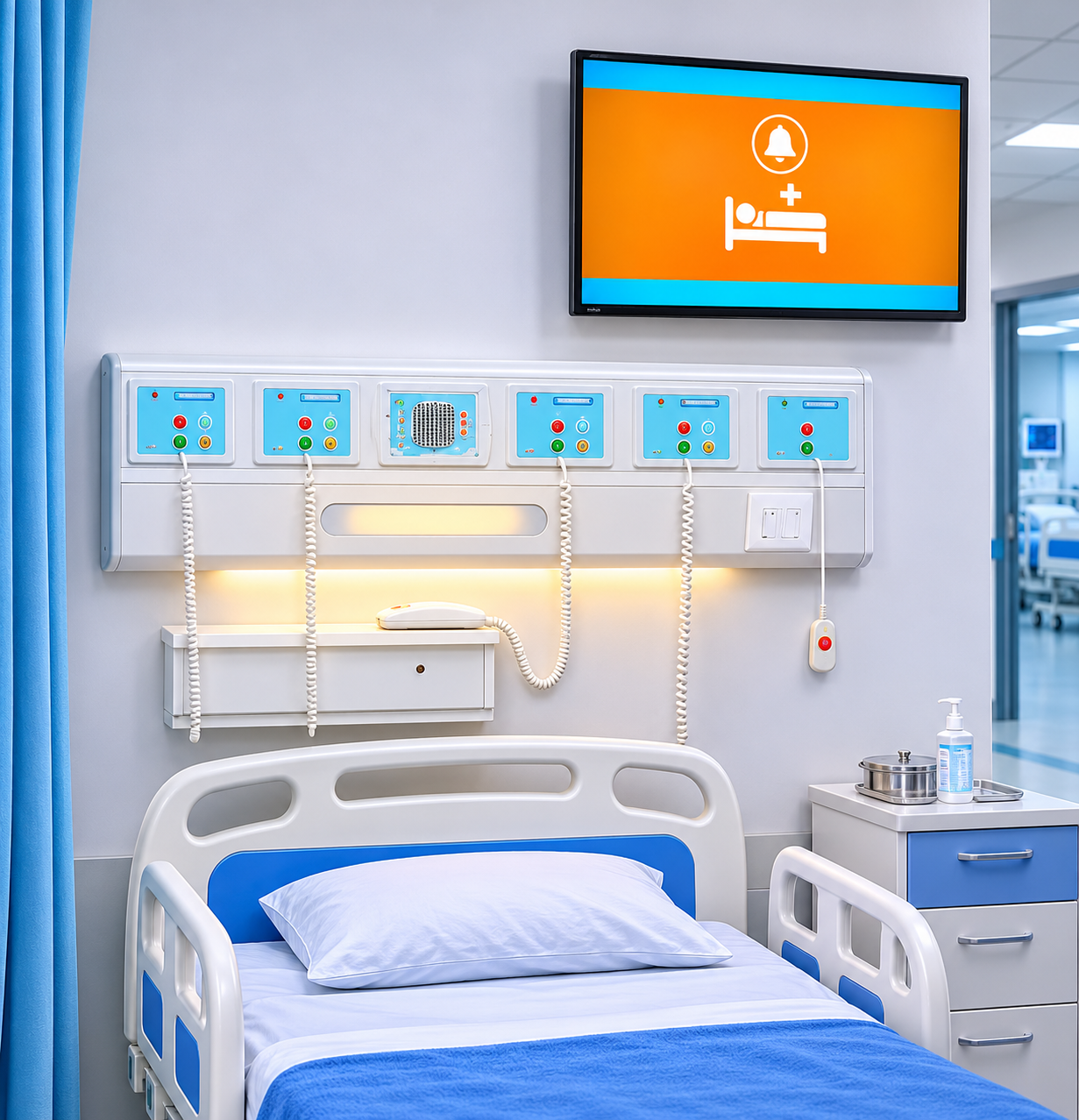
Nurse Call System
Designed to provide reliable communication between patients and nursing staff, featuring patient call buttons, emergency call facilities and visual or audible indication systems.
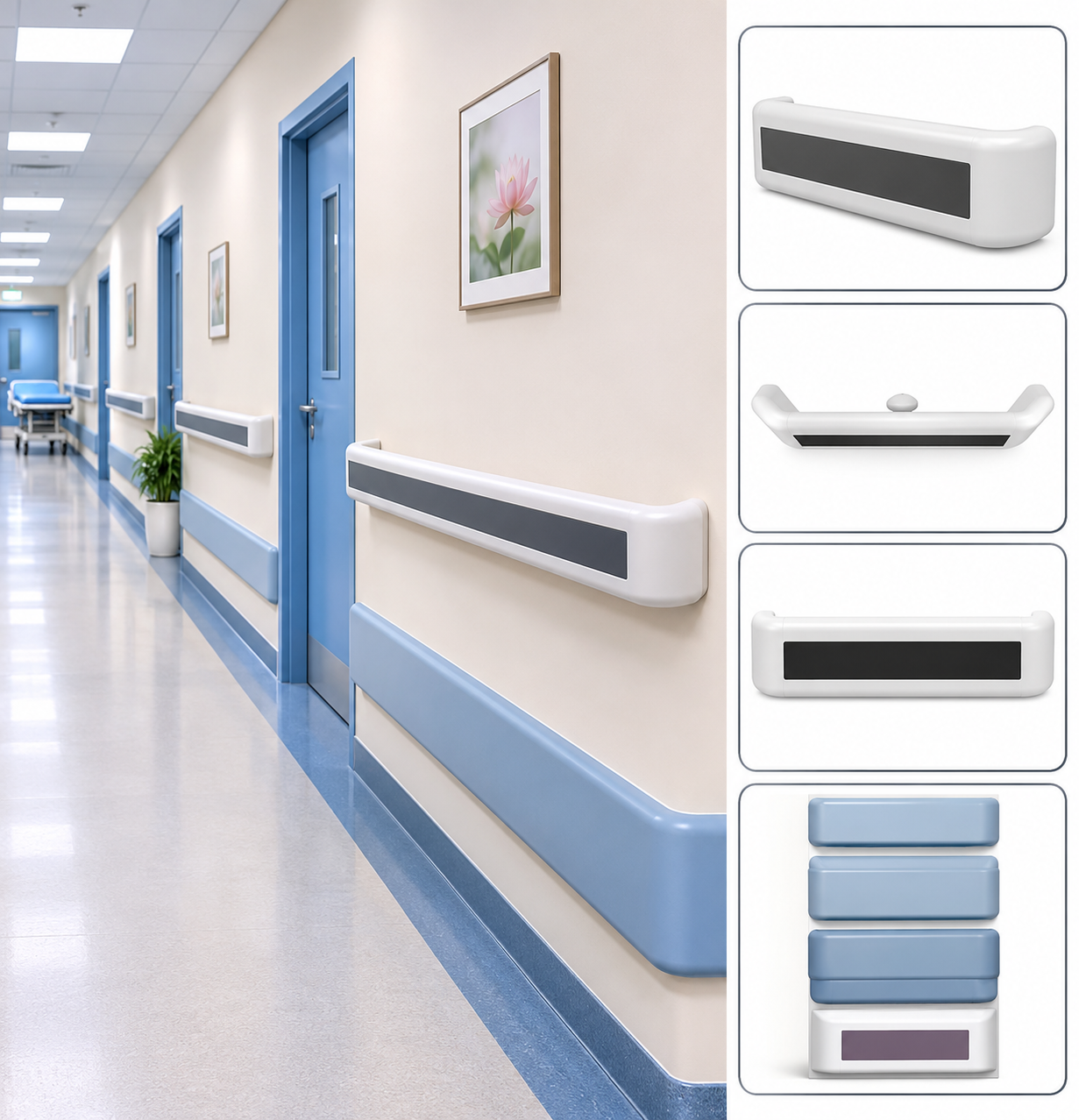
Hand Rails & Wall Guards
Manufactured using durable materials with smooth and hygienic surfaces, designed to provide patient support, protect walls from impact and ensure safe movement within hospital corridors.
Many people search this Keywords: modular operation theatre, modular operation theatre manufacturer, modular operation theatre company, modular ot manufacturer in india, modular operation theatre installation, modular ot setup, modular operation theatre cost, modular ot price in india, modular operation theatre design, modular operation theatre turnkey project, modular operation theatre suppliers, hospital operation theatre equipment, modular ot panel manufacturer, modular ot wall panels, modular operation theatre contractor, modular operation theatre manufacturer in india, modular ot installation company in india, best modular operation theatre company in india, modular ot turnkey project contractor, modular operation theatre for new hospital, modular ot renovation and upgradation, modular operation theatre price with installation, modular ot wall panel supplier, modular operation theatre equipment supplier, modular ot design and installation services, modular operation theatre for multispeciality hospital, modular ot project quotation, modular ot manufacturers in delhi ncr, modular operation theatre exporters from india, modular operation theatre manufacturer, modular operation theatre manufacturer in india, modular ot company in india, modular operation theatre installation, modular ot turnkey project, modular operation theatre cost in india, modular operation theatre suppliers, modular ot design, modular ot wall panels, modular ot hvac system, modular ot doors, what is a modular operation theatre, modular ot vs conventional ot, modular ot maintenance, modular operation theatre manufacturer in india, modular operation theatre manufacturers, modular ot manufacturer, modular ot supplier india, modular operation theatre company, modular operation theatre contractor, modular ot turnkey project india, modular operation theatre installation company, what is the cost of a modular operation theatre in india?, how is modular ot project cost calculated?, what is included in a modular ot quotation?, how much does modular ot installation cost?, what factors affect modular operation theatre pricing?, modular ot manufacturer india, modular operation theatre cost, modular ot installation, modular ot wall panels, what is modular ot, modular ot ka price kitna hai, modular operation theatre manufacturer in india, modular operation theatre cost in india, modular ot installation and turnkey projects, modular ot wall panels and related products, modular operation theatre design and planning, modular operation theatre manufacturer for hospitals in india, modular operation theatre design and installation services, modular ot turnkey project for multispeciality hospital, modular operation theatre cost with installation in india, modular operation theatre quotation for 2 ot rooms, modular ot wall panel supplier for hospitals, modular ot installation in an existing hospital, modular operation theatre project execution company, modular ot with laminar airflow and hepa filtration, modular operation theatre planning for a new hospital, modular ot maintenance and annual service provider, modular operation theatre manufacturer with pan india service, ot paneling and construction, modular ot wall panels, modular ot ceiling panels, ot hpl panels, stainless steel ot panels, antibacterial ot wall panels, air filtration and hvac, laminar air flow system for ot, hepa filter for operation theatre, modular ot hvac system, ot air handling unit (ahu), operation theatre air filtration system, ot doors and accessories, hermetically sealed ot door, automatic operation theatre door, ot control panel, operation theatre pass box, medical gas pipeline system for ot
Conclusion
Modular operating theaters have become an important solution for hospitals looking to develop modern, organized, and technically integrated surgical environments.
Their major advantages include prefabricated construction, flexible design, efficient equipment integration, hygienic interior finishes, advanced air filtration options, controlled environmental conditions, and better coordination of essential medical infrastructure.
From modular wall panels and HEPA filtration systems to surgical lights, medical gas outlets, equipment pendants, and OT control panels, every component plays an important role in creating an operating theatre that supports the requirements of modern surgical procedures.
However, the success of a modular operating theatre depends on proper planning, engineering, material selection, professional installation, testing, and regular maintenance.
Hospitals should carefully evaluate their surgical requirements, technical specifications, infrastructure, applicable healthcare standards, and long-term operational needs before selecting a modular OT solution.
A properly designed and professionally installed modular operating theatre can provide a well-organized, adaptable, and efficient surgical environment for modern healthcare facilities.
Looking for a Modular Operating Theatre Solution for Your Hospital?
Altos Engineers Pvt. Ltd. Provides modular operating theatre solutions designed according to hospital requirements, available infrastructure, and project specifications.
Whether you are planning a new modular OT, upgrading an existing surgical facility, or developing a specialized operating theatre, our team can help you understand the design, components, technical requirements, and installation process.
Contact us today to discuss your Modular Operation Theatre project and request a customized consultation.